Introduction
Hi everyone! We’re AGH AVADER, a student team from AGH University of Krakow, Poland. Our team works on autonomous vehicles, and right now our main focus is small-scale autonomous race cars for RoboRacer competitions. This is our first post here, made possible by AISLER’s support for our team this season.
Your project
A RoboRacer car is a 1:10 scale vehicle packed with a lot of hardware: an onboard computer running the autonomy stack, LiDAR, cameras and other sensors, all powered from a single battery in a very small chassis. Our goal is a reliable, compact power system that keeps everything running regardless of battery state, and lets us develop on the bench without constantly swapping batteries.
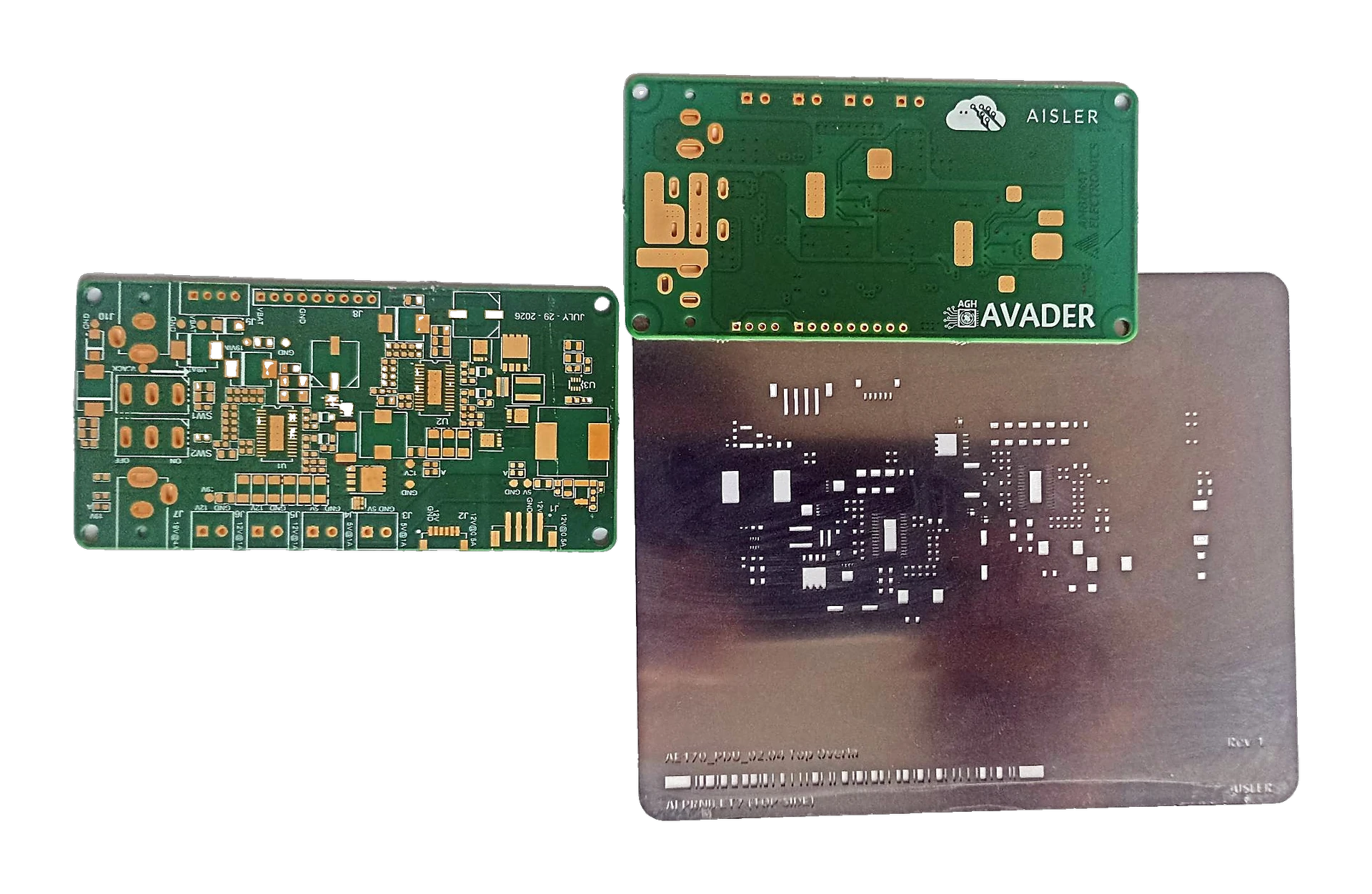
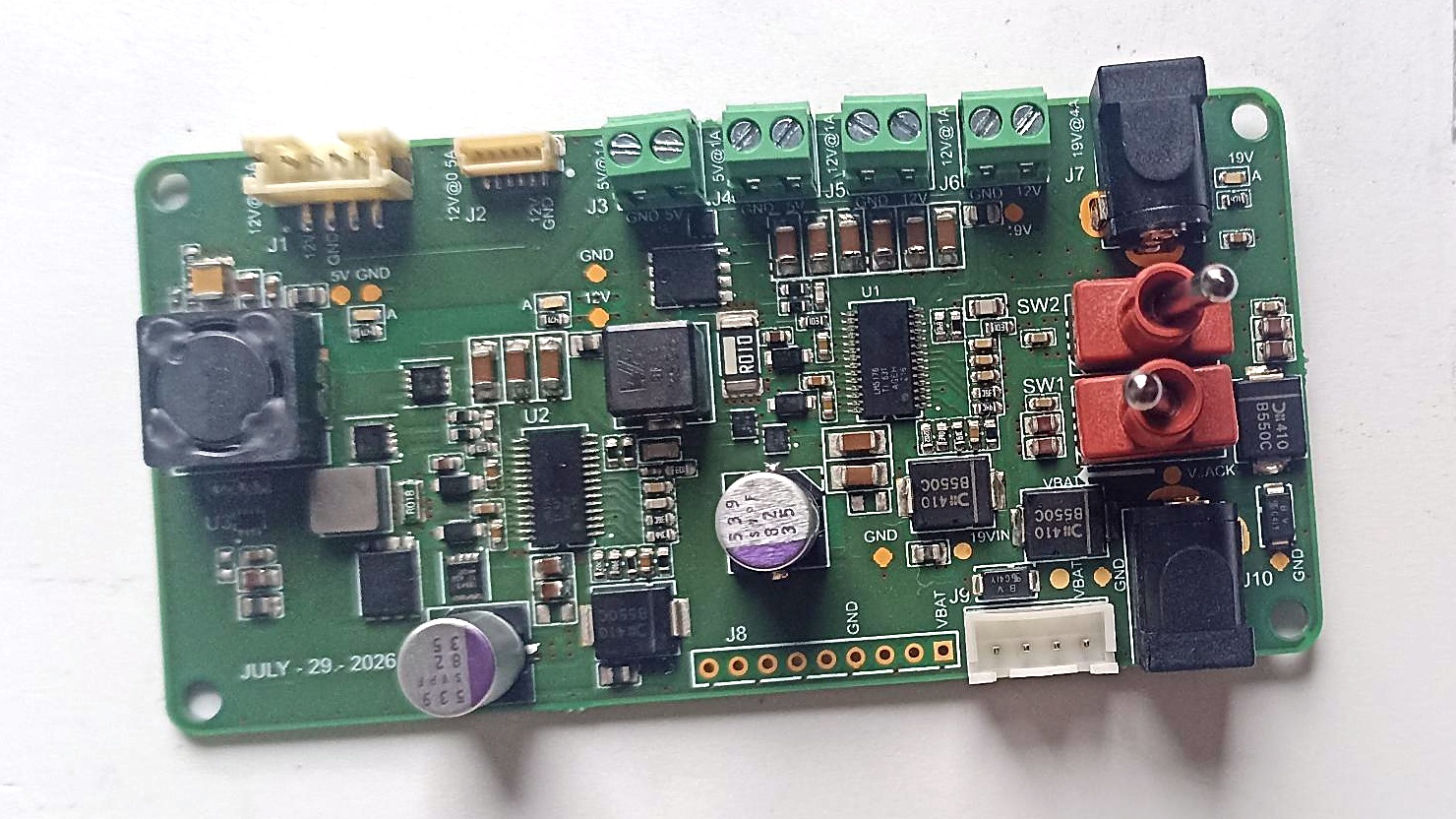
The first step was the power distribution unit (PDU) shown here.
Electronics and design
The board is the open-source F1TENTH Powerboard v10, developed by Ambimat Electronics and the University of Pennsylvania: GitHub - f1tenth/f1tenth_powerboard_v10 · GitHub . The repository includes schematics, Altium layout and full manufacturing data, so instead of buying assembled boards we fabricated them ourselves with AISLER, added our team and AISLER logos to the silkscreen, and assembled them in-house. Big thanks to the original authors for making the design public!
The PDU takes power from the car’s battery [LiPo, xS] or an external DC supply and provides:
- 19 V @ 4 A (barrel jack) for the main computer, an NVIDIA Jetson Orin Nano running our autonomy stack
- 2× 12 V @ 1 A and 2× 5 V @ 1 A on screw terminals for sensors and peripherals
- 2× 12 V @ 0.5 A on JST connectors for additional peripherals
- Battery and DC-jack inputs with Schottky diode ORing, so the car can run on bench power and switch to battery without rebooting the computer
- Two toggle switches to control [main power / compute power] separately
The 19 V and 12 V rails are generated by two LM5176 4-switch buck-boost controllers, so the outputs stay regulated across the whole battery voltage range, from fully charged to nearly empty. The 5 V rail comes from a separate buck converter. High-current paths use wide copper pours with via stitching, and the bottom layer carries most of the power distribution.
Tips, tricks & offers
- Order a stencil together with the boards. With fine-pitch controllers like the LM5176 (HTSSOP), it makes in-house assembly much more repeatable than hand-applying paste.
This is the first advanced board our team has fabricated and assembled, and it definitely won’t be the last: more boards are already in the pipeline. Now that the PDU is ready, it’s time for the real test: integrating it into our car and putting it through its paces on the track. We’ll share how it performs in a future update!
Thanks to AISLER for sponsoring our PCBs and stencils!