We are CAPILUX, a student team currently working on an experiment aboard the REXUS 38 sounding rocket as part of the Swedish-German REXUS/BEXUS programme (cycle 17). Our experiment investigates capillary-driven fluid behaviour in microgravity — studying how liquids move through V-groove channels and passive valves when gravity no longer dominates the flow. Understanding this is directly relevant to passive fluid management systems used in spacecraft propellant tanks and thermal control loops.
We are very grateful to AISLER for sponsoring the PCB manufacturing for our project. Two of our boards were made by AISLER: our mainboard and our TV mux board, and that’s what we’d like to share with you today.
The Mainboard
The mainboard is the brain of our experiment. It is a 4-layer, 1.6 mm FR-4 PCB with a custom shape designed to mount directly to the rocket bulkhead via M3 standoffs. Its responsibilities include:
- Converting the 28V RXSM bus down to +5V (using an Analog Devices MAX42406 synchronous buck converter with a common mode choke for filtering) and then to +3.3V via the Raspberry Pi Pico’s onboard LDO
- Receiving SOE and LO signals from the REXUS service module
- Controlling 8 observation cameras and experiment chamber LEDs
- Measuring onboard acceleration and environmental data via an IMU and pressure/temperature sensor
- Logging all data to flash and SD card
- Communicating with the ground station via RXSM
- Driving the TV channel mux board
The board was deliberately sized larger than strictly necessary,
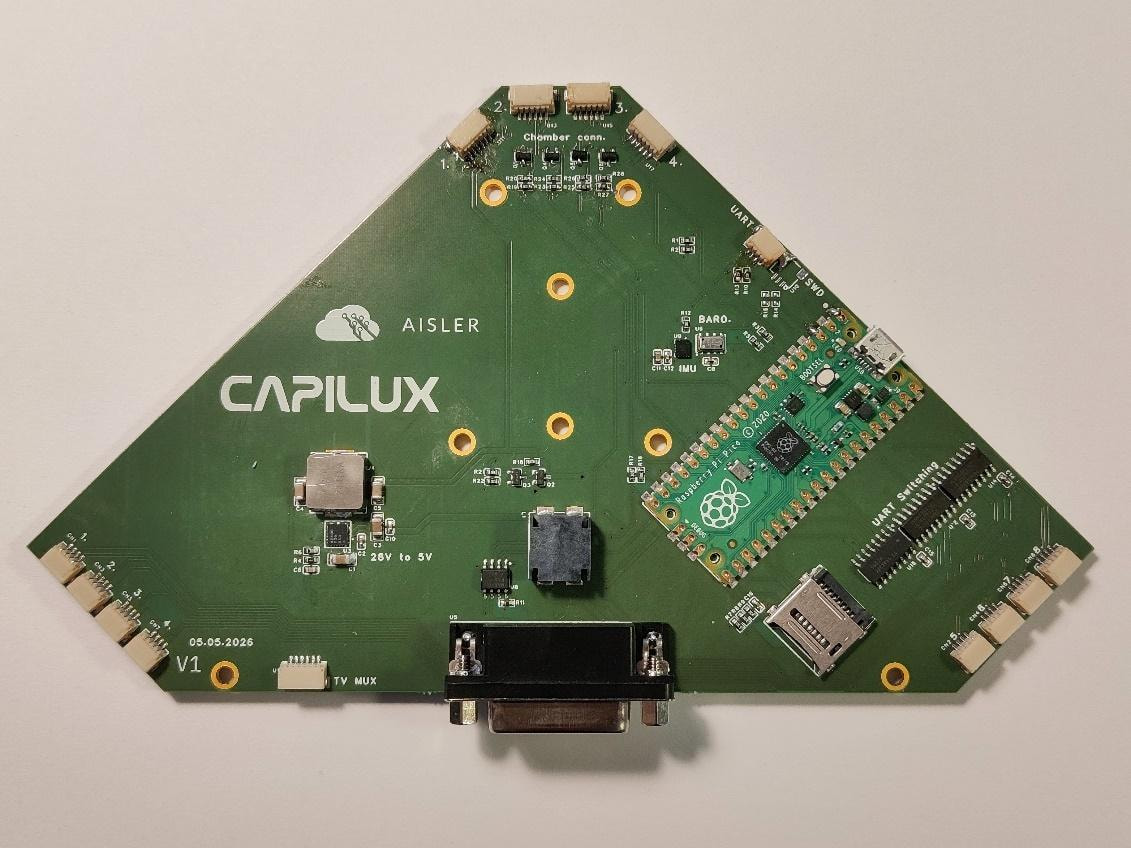
this gave us better structural stiffness, a larger thermal mass, and made assembly and debugging significantly more manageable as a student team.
The TV Mux Board
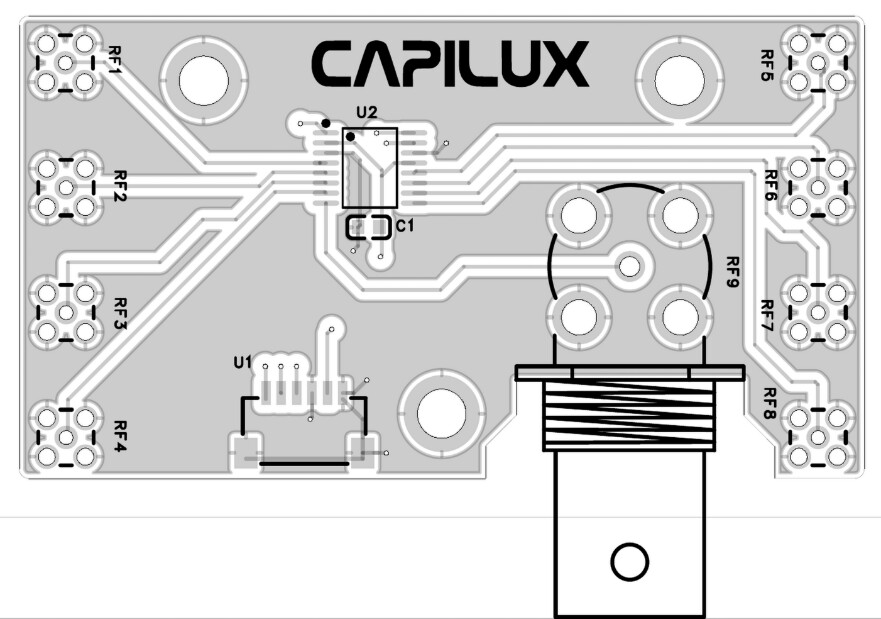
With 8 cameras spread across our experiment module, we needed a way to send video down through our single allocated REXUS TV channel. The solution is our TV mux (multiplexer) board, which lets us switch between all 8 camera feeds at any point during flight, either on a preprogrammed schedule or via a ground station command.
The board lets us verify all 8 cameras before launch and capture the most scientifically valuable moments from each experiment chamber during flight. It also provides a video redundancy path — even if SD cards cannot be recovered after landing, footage will have been transmitted.
Future plans
Both boards are currently at their first revision, and we already have a list of improvements we plan to implement before flight. Having AISLER’s support made it easy to go from design files to manufactured boards quickly. A huge thank you to AISLER for making all of this possible!