Hello everyone,
we are the RoboterClub Aachen, a group of students from FH and RWTH Aachen. Normally we design different driver or communication boards and let them be manufactured at Aisler for our Robots who participate in a seasonal competition. This however needs a lot of soldering which is especially time-consuming if the boards are big and the components small. So we came up with the idea of designing our own Reflow-oven.
The Reflow-oven looks like this:
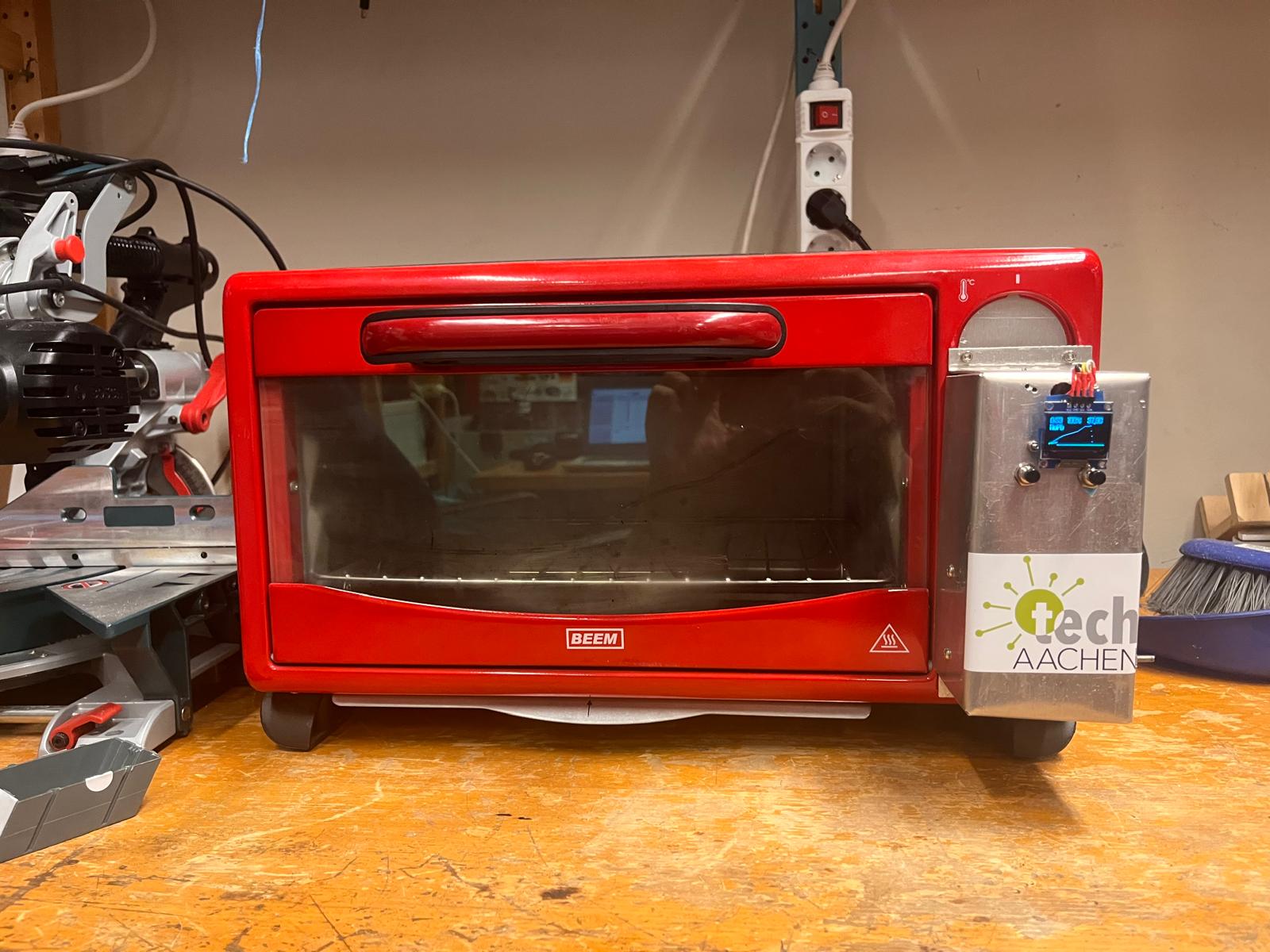
This is a standard Pizza-oven, but the original circuitry is extended by an additional HV- and a UI-Board. The HV-Board controls Thyrristors and is directly fed by the power outlet allowing to connect the 50 Hz 230V AC to each heating element. The HV-Board also makes sure to supply the 5V DC for the UI-Board. The UI-Board consists of the main peripherals. The Temperature is read through a RTD 4-wire IC’s sensor using a PT1000 and SPI for communication. Control of the display and the temperature profile for the type of solder currently used happens through I2C. It will set the heating based on how often the Thyrristors are turned on or off per 50Hz cycle, while a control loop makes sure to average error and command track based on sensor values.
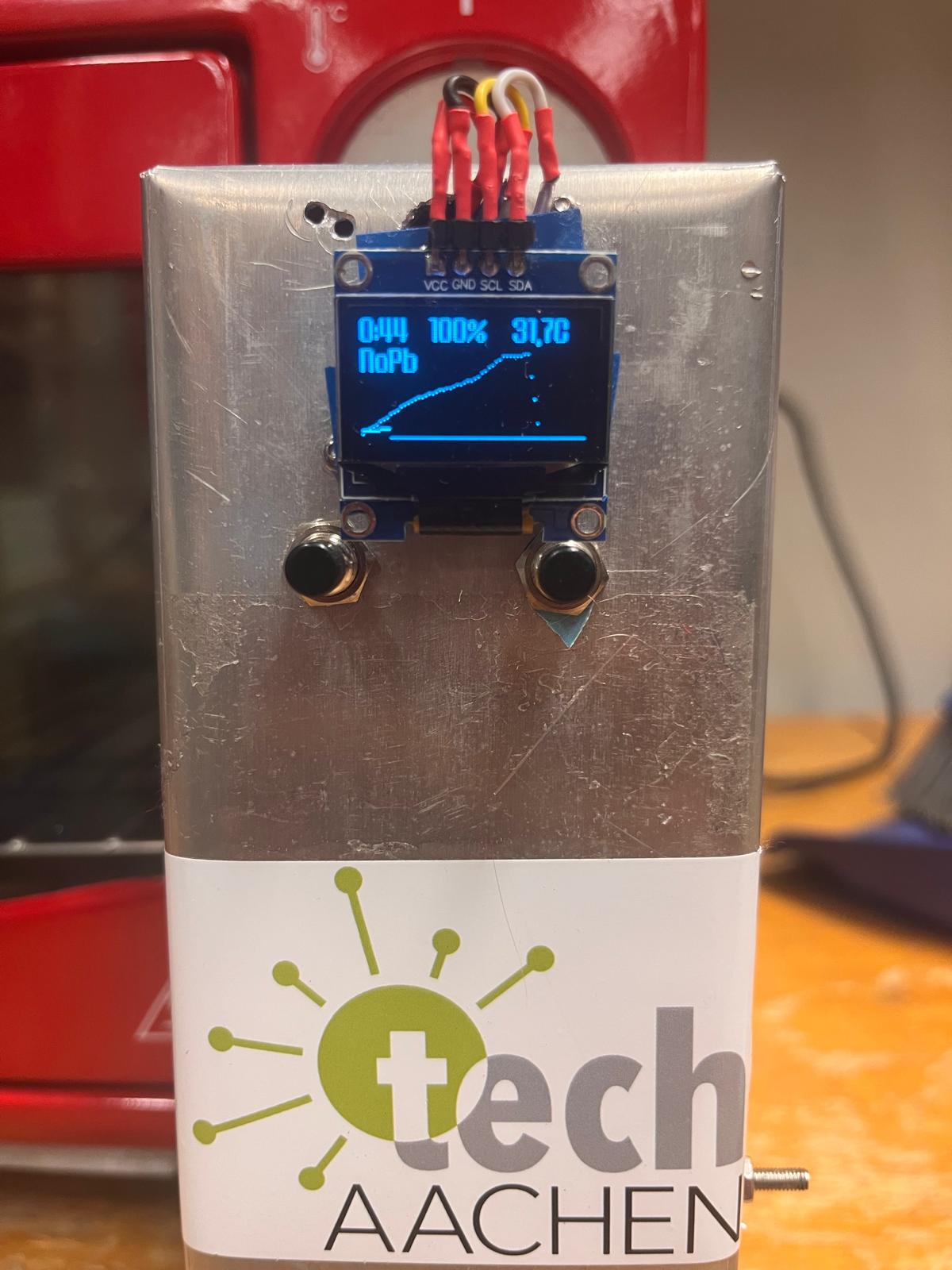
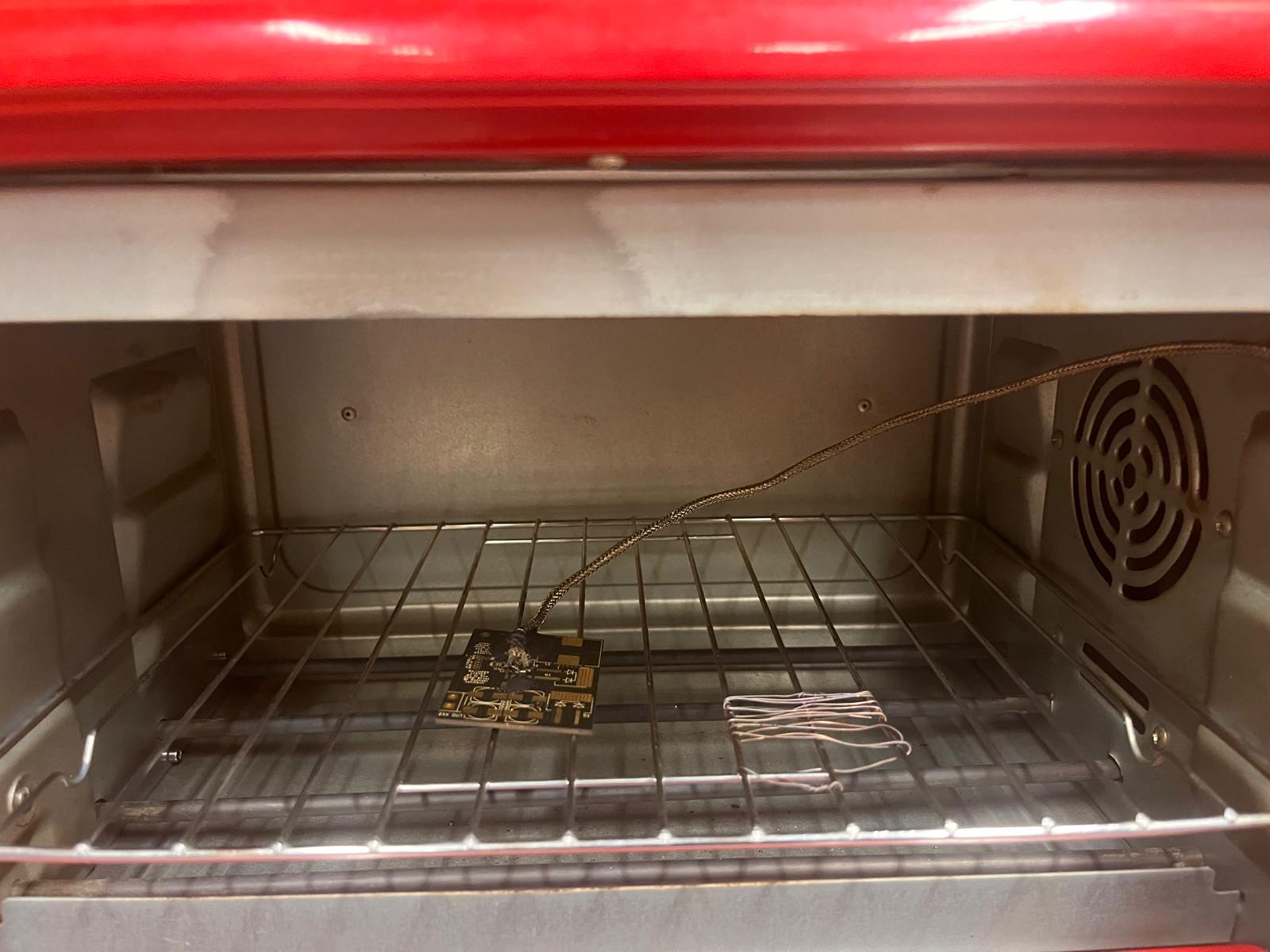
The profiles are fixed programmed into the MCU and simple buttons allow to choose which profile to use.
Although the oven already works from a soldering only perspective the primitive UI, the hardcoded Temperature profiles as well as missing features like advanced Monitoring and flexible control make a new Reflow-oven structure desirable. Therefore a new oven structure was introduced.
Similar to before a separation into UI- and HV-Board is made and the HV-Board is made up of Thyrristors that control the main heating elements of the oven. The HV-Board is controlled via a zero-crossing detection which detects Thyrristor zero crossings so that the Triacs can be turned off. The HV-PCB this structure:
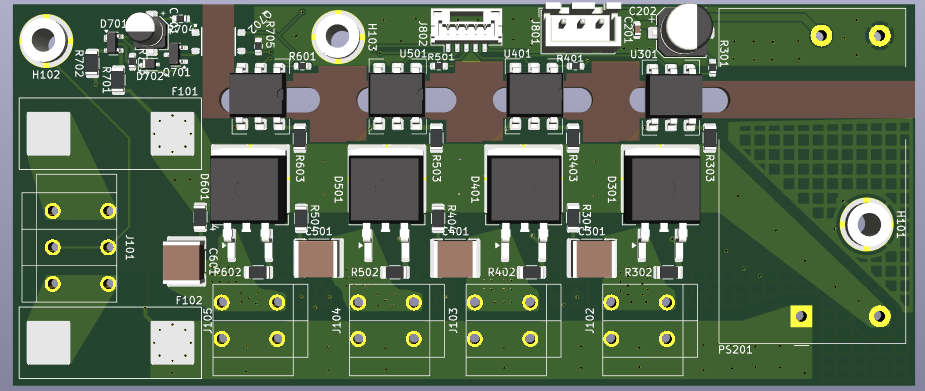
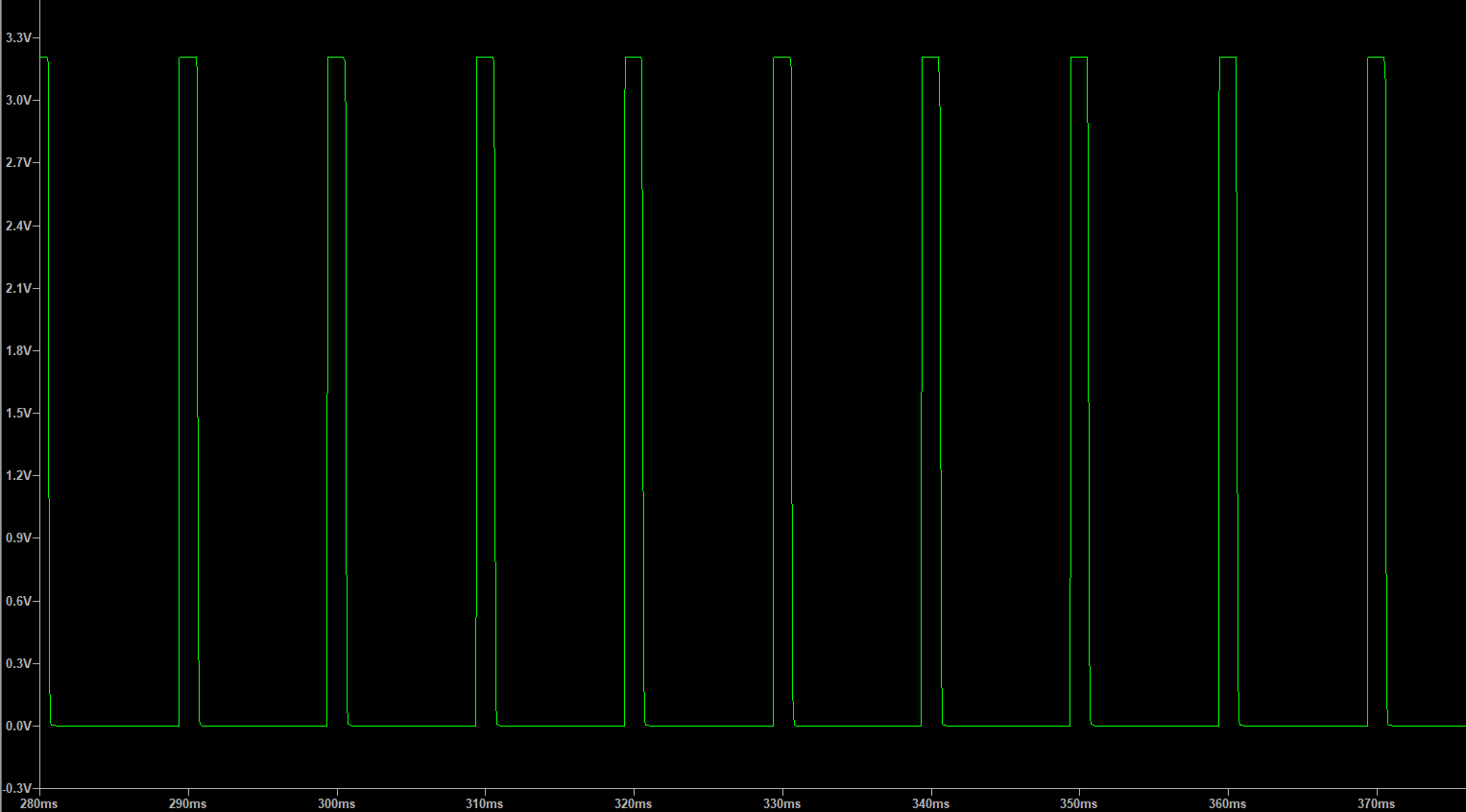
The main reason for such a zero crossing detection is the fact that the Triacs conduct current into both directions making self Thyrristor self turn off impossible, but turning Triacs on/off at non-zero current will have excessive EMI on UI-Board and the person using it. This necessitates a zero crossing detection and consequently a circuit described in Zero-Crossing-Detection. The zero crossing detection has the following waveform for a Triac connected to 50 Hz 230V AC:
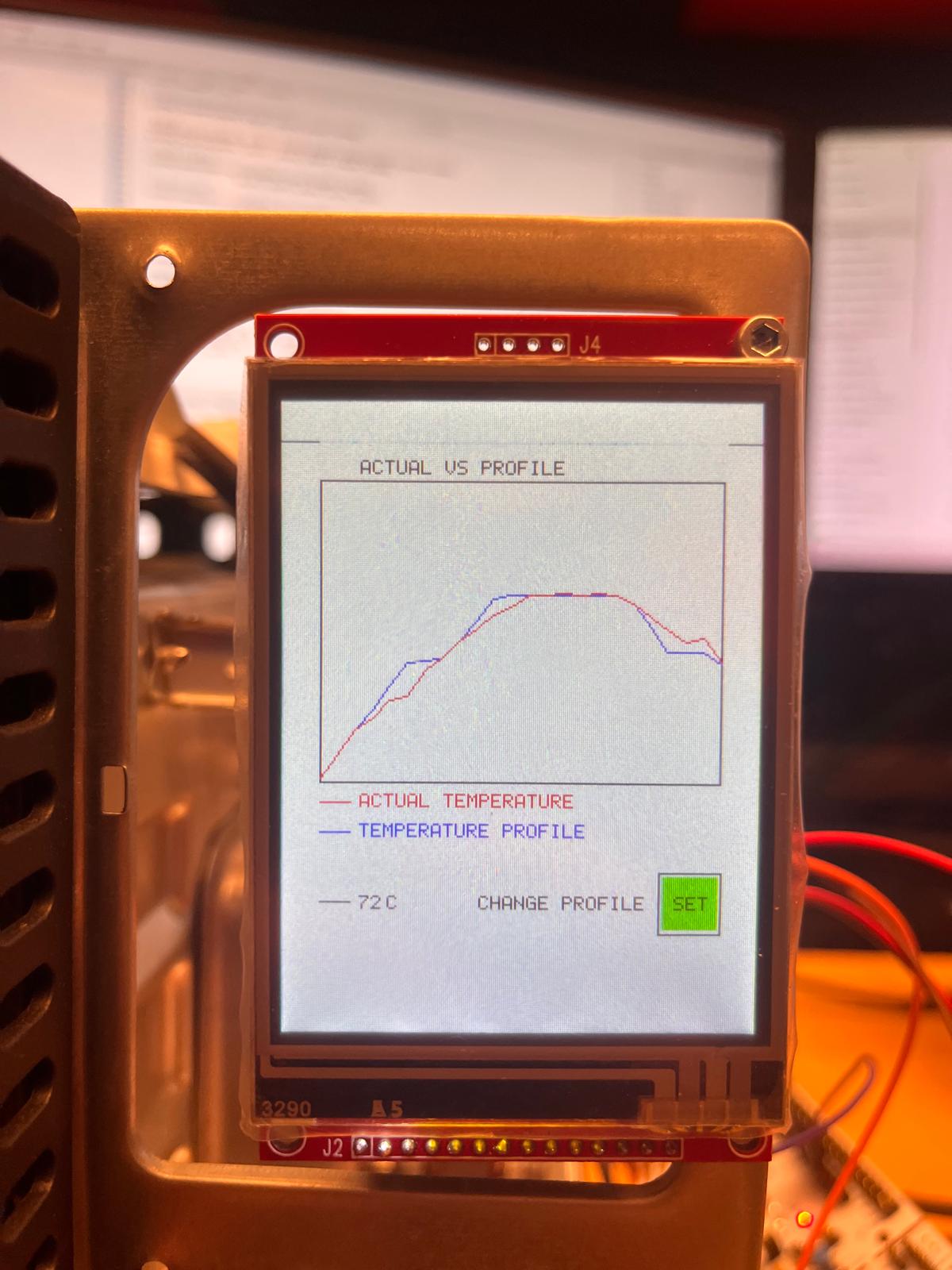
The UI-Board is the main control unit and consists of an MCU. A sensor per heating element working with PT1000 and RTD 4-wire measurement is utilized. The UI-Board also consists of two dispaly types with one being the ILI9341 module which is the main display consisting of touch display and SD-Storage controlled via SPI shown in the following:
For more User-friendly features , wifi access through an RF-Module, different buttons and sub-displays are attached allowing more advanced use of the Reflow-oven with board-/materialspecific temperature profiles. The RF-Module is most problematic as the antenna implemented consists of a simple, delicate PCB trace antenna which must endure the EMI of the switching Triacs, so positioning becomes essential. the Antenna is chosen to be at the edges of the UI-Board and surrounded nearly exclusively by the chassis of the oven which is connected to ground.
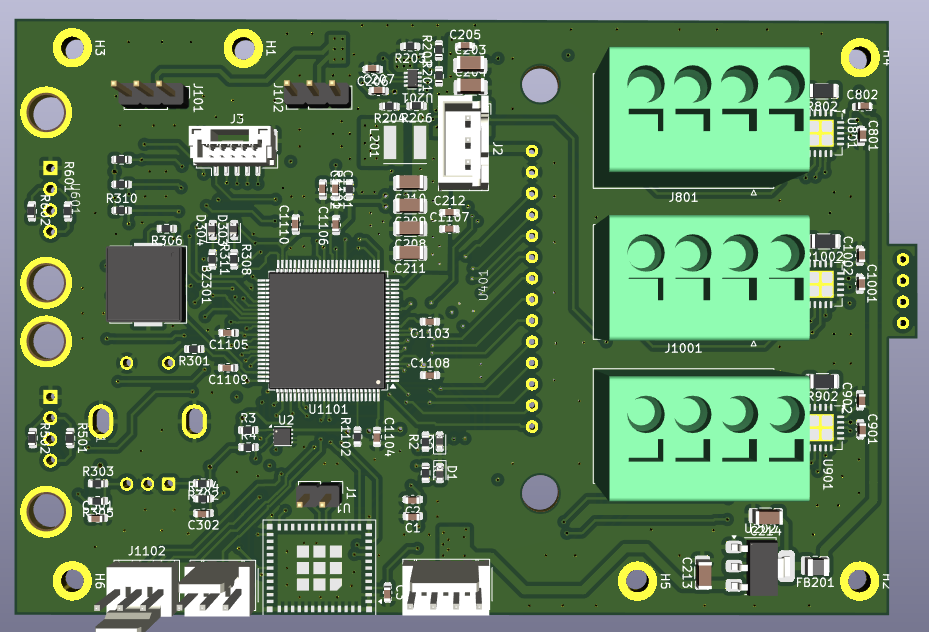
The boards are 4-Layer PCB’s and need four types of voltages. The first one is the 230V 50Hz AC which is also the main supply. The second one is the 5V DC needed for the UI-Board. The third one is the 3.3V needed for side IC’s such as the sub-displays. The last one is the analog power supply needed for the different sensors and using specifically very low dropout LDO’s to avoid noise from DC-DC-Converters that would interfere with the measurement process. This is then enhanced by using PI-Filters (Chebycheff) to reduce clock frequency influence of the MCU on the 3.3V Analog power supply.
The UI-Board is shown below:
The UI- and HV-Board are placed at different ends of the oven and connected via interconnects
This project is ongoing which means the second Reflow-oven is currently prepared for usage and the control as well as User Interface is redesigned.
Further information on the project can be found on our website RoboterClub Aachen Aachen.
We are thankful for the help of Aisler during both design phases of the different Reflow-oven structures. Aisler has been a reliable partner for all our current projects and beautiful new boards are cretaed each season.
We hope this might motivate you also to custom design your setup and make your working place more efficient.
Kind Regards
Roboterclub Aachen Team