How do you actually know your battery-powered design will last as long as you calculated from datasheet values?
Part of the problem is that regular multimeters aren’t built to resolve currents down in the µA (or even nA) range and the equipment that actually can do that properly costs more than most of us want to spend on a side project. That gap makes it hard to really predict how long a device will run in the field.
I’ve been using Nordic Semiconductor’s Power Profiler Kit II (PPK2) for exactly this and it’s honestly punched way above its price tag (~€90) compared to the thousands you’d pay for a proper benchtop sourcemeter. It covers an impressively wide range from 200 nA up to 1 A, with automatic range switching for the best resolution at each level.
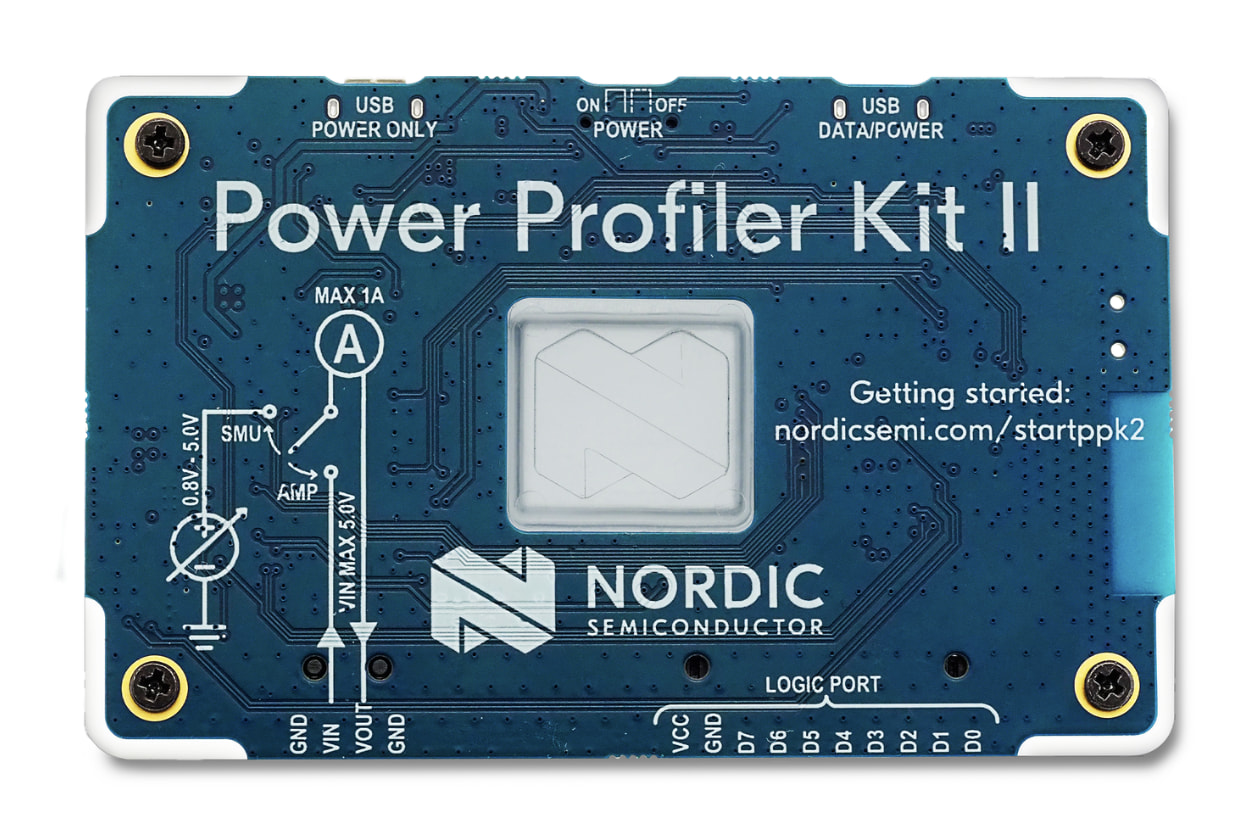
Source: Nordic Semiconductor
You can use it in two working modes:
- Source Meter: The PPK2 powers your board directly (up to 5 V / 1 A) while measuring, so you don’t need a separate supply on the bench.
- Ampere Meter: The PPK2 sits inline between your actual power source (e.g. battery) and your board, so you’re measuring what your real setup draws.
Besides the PPK2 itself, there’s the free Power Profiler app (part of nRF Connect for Desktop, runs on Windows/Linux/Mac) that lets you control the PPK2 and plot the current trace live on your screen. You can also export the trace as a CSV and run your own analysis afterwards.
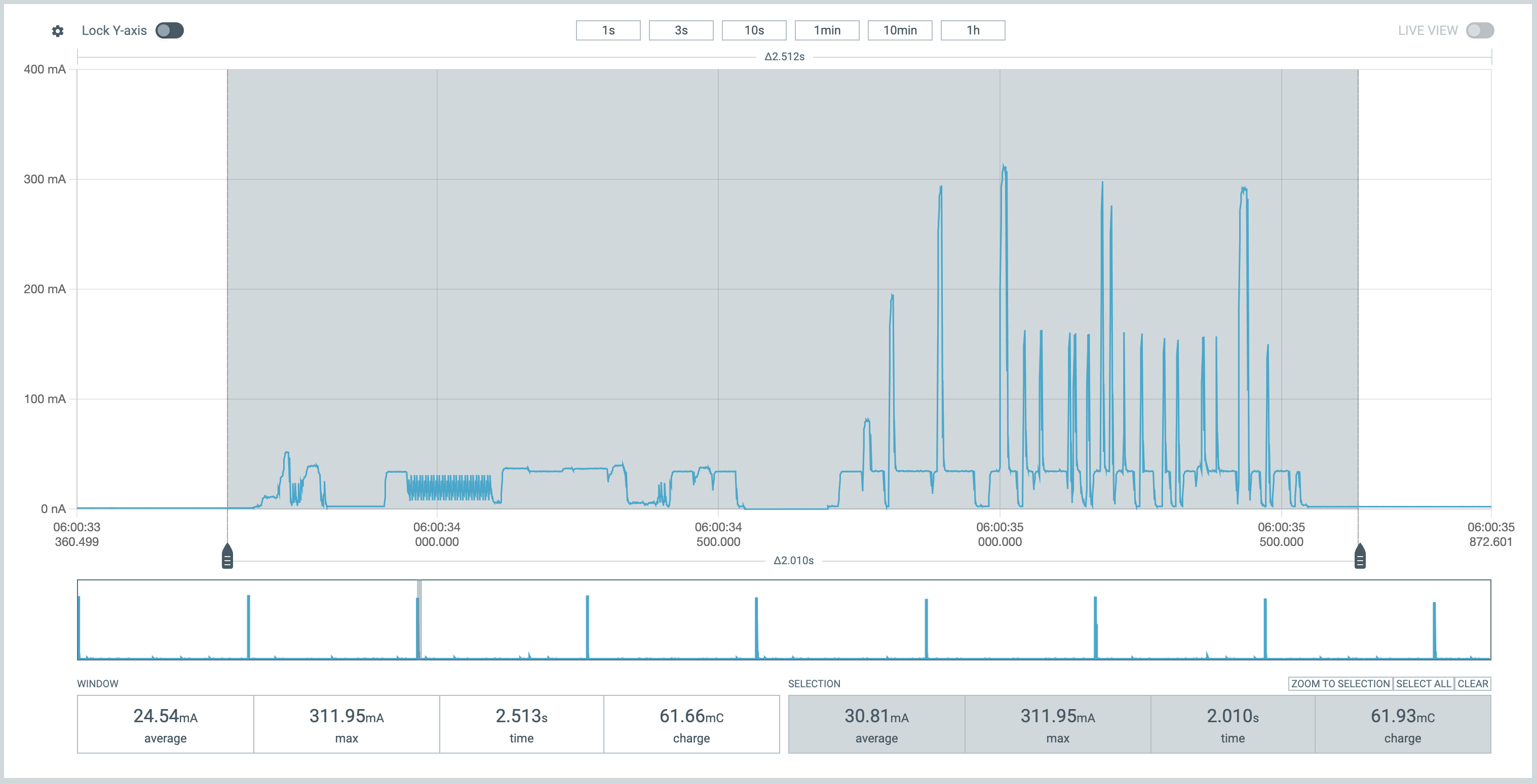
Source: Example of my own measurements
I stumbled on it when I was working on a battery-powered NB-IoT sensor design, where a single sleep-current number wasn’t enough. I needed to see the full behavior of my board (idle draw, wake-up spikes, transmission bursts) plotted over time. That’s what actually determines runtime. Since then, I use the PPK2 whenever I’m working on a new design.
Link to PPK2: https://www.nordicsemi.com/Products/Development-hardware/Power-Profiler-Kit-2 (ordering code: nRF-PPK2)