Hydrogen Safety Circuit
We are HyDriven, a student team from the University of Twente and Saxion University of Applied Sciences in the Netherlands. Each year, we design and build a hydrogen-powered Formula Student race car.
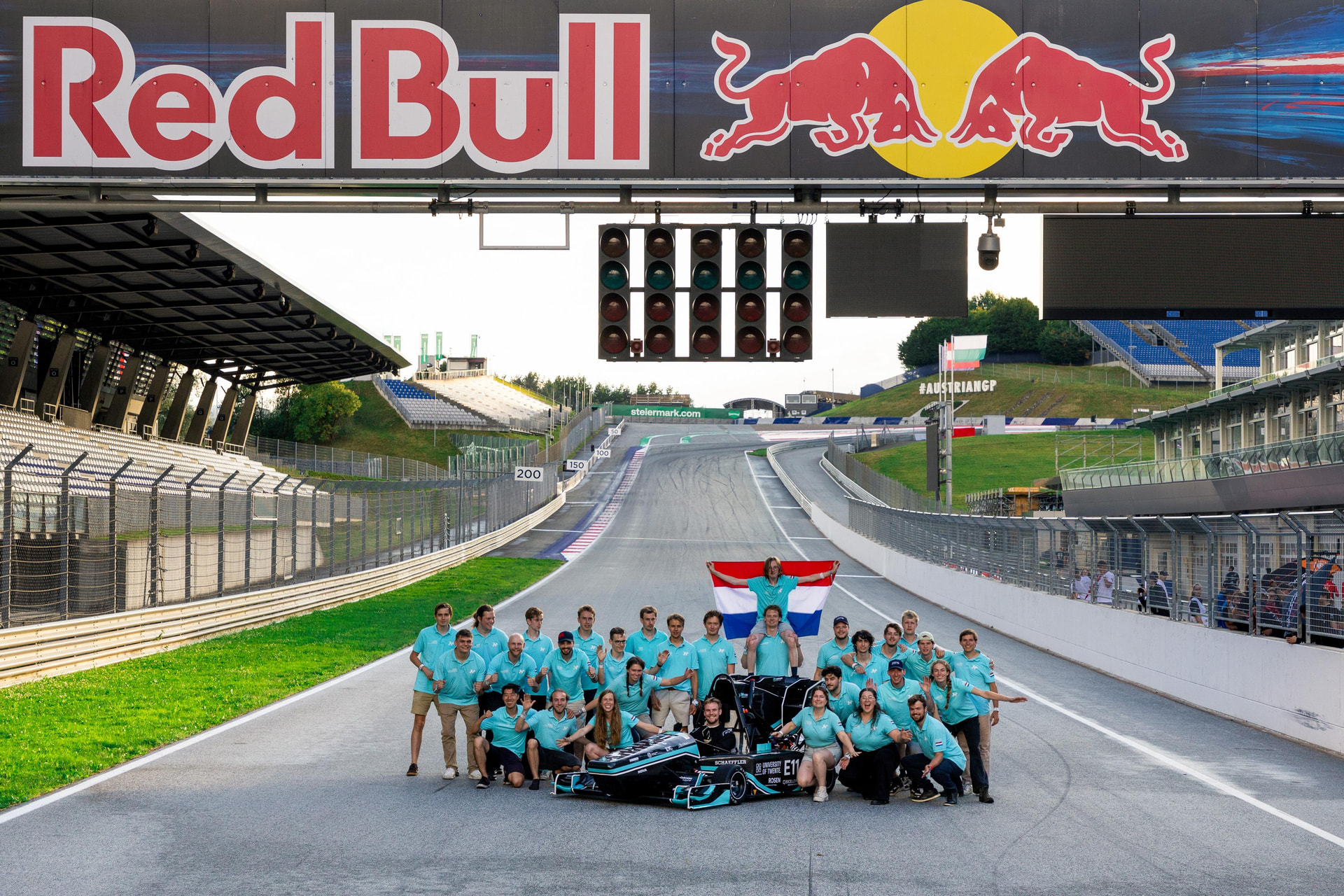
Red Bull ring
While most people focus on performance, a large part of our engineering effort goes into safety. One of the most important systems in our car is the Hydrogen Safety Circuit (HSC).
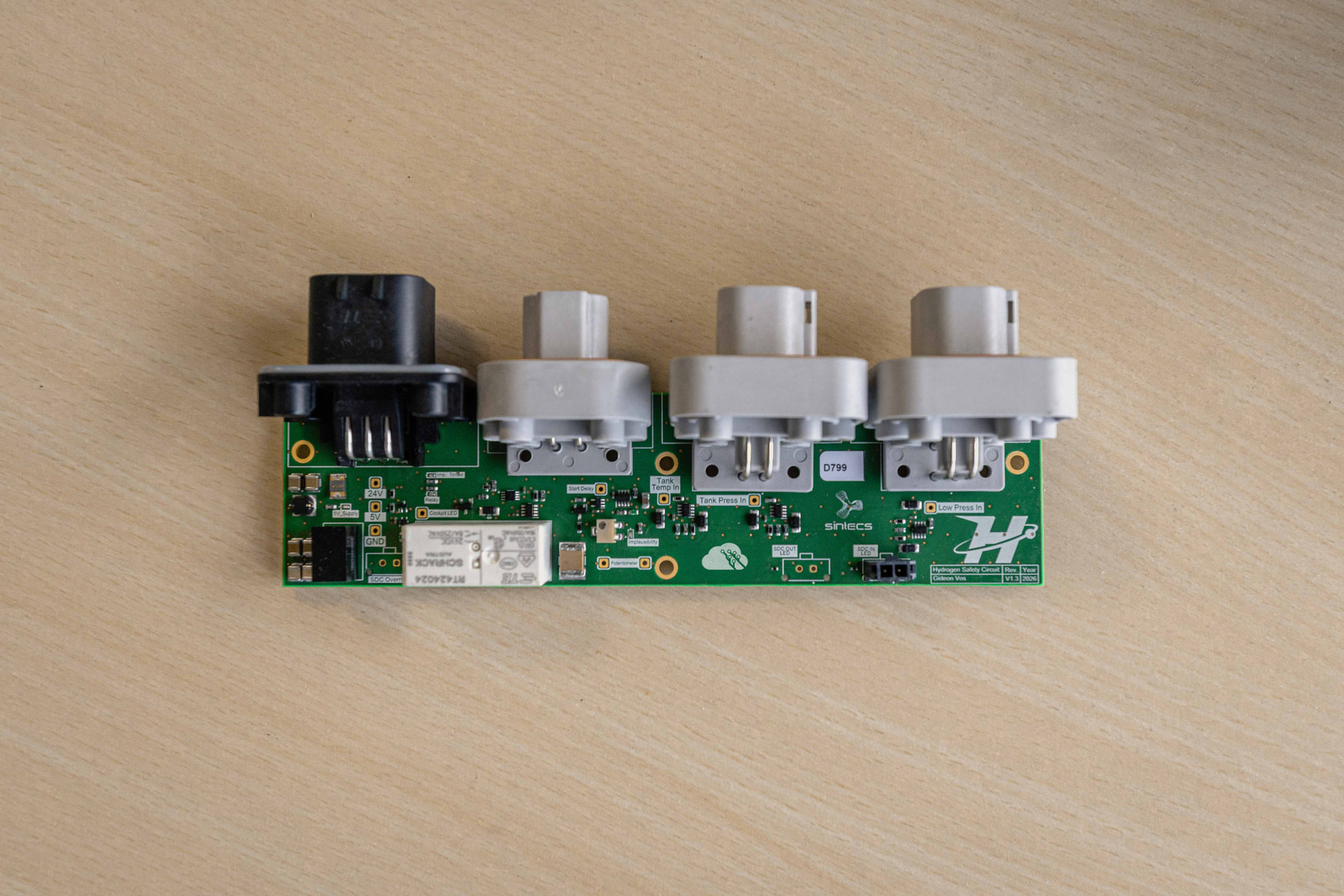
Picture HSC PCB
The HSC is a fully analog control circuit responsible for monitoring the health of our hydrogen system. It continuously measures:
-
The pressure in our 10 bar low-pressure lines.
-
The pressure of our 350 bar hydrogen tank.
-
The temperature of the tank.
Based on these inputs, the circuit determines whether the system is operating within safe limits.
If any value exceeds its upper or lower threshold, the HSC immediately shuts down the hydrogen system. This includes disabling critical components such as valves and regulators, effectively bringing the system into a safe state.
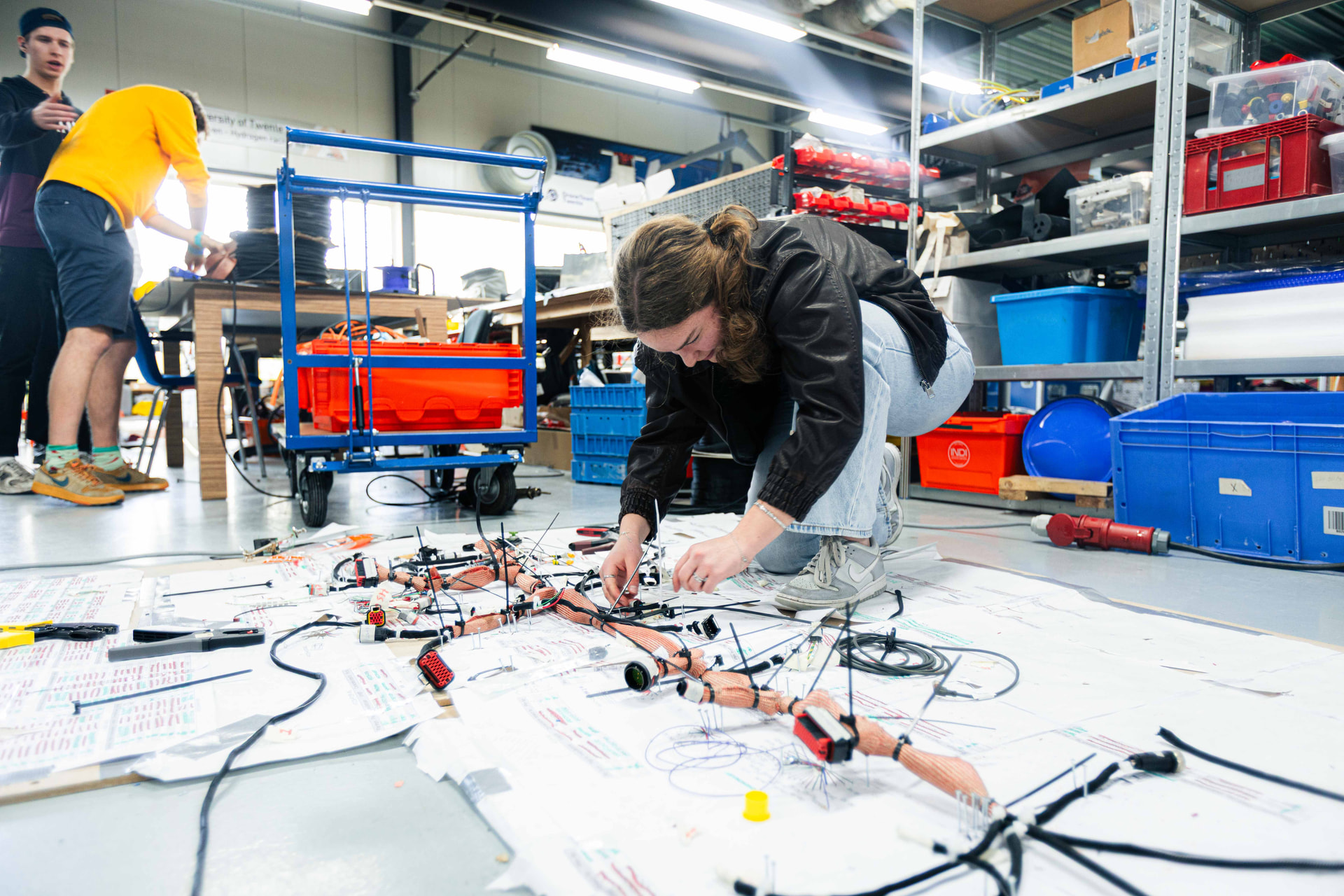
Building a wire harness
One of the key design choices we made was to implement the entire system as an analog circuit.
In many modern systems, safety is handled through software. However, in a high-risk environment like hydrogen racing, software introduces uncertainty. Bugs, timing issues, or unexpected states could potentially bypass safety mechanisms.
By using a purely analog design, the HSC operates independently of any microcontroller. This means:
-
No software bugs can interfere with safety.
-
The response time is immediate.
-
The system remains predictable under all conditions.
To achieve this, we used comparator-based threshold detection for each sensor signal. Each measurement channel is processed independently, ensuring that a fault in one part of the system does not compromise the entire safety chain.
Because our vehicle combines a hydrogen fuel cell system with a high-voltage battery, system complexity is significantly higher than in conventional Formula Student cars. This makes reliable monitoring and fail-safe behavior essential.
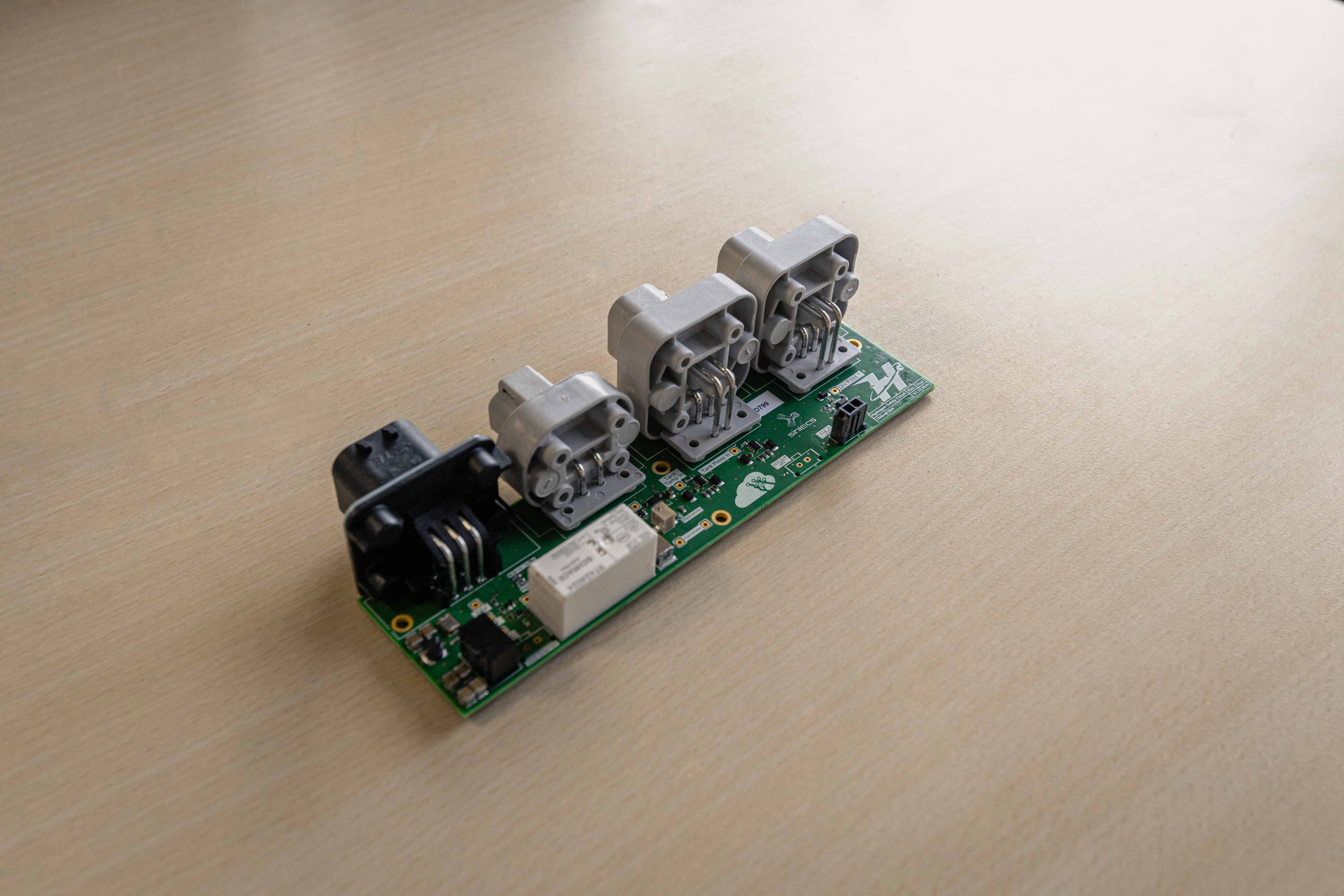
HSC PCB
From a PCB design perspective, robustness was a key focus. Clear signal routing, noise reduction, and reliable connectors were essential to ensure stable operation in a harsh racing environment with vibration and electrical interference.
While designing the HSC, we also had real-world testing and competition in mind. During events such as Formula Student competitions, systems are exposed to continuous vibration, temperature changes, and long operating periods under load. In these conditions, reliability becomes even more critical than on the workbench.
A purely analog safety circuit ensures that even in these dynamic environments, the system reacts instantly and predictably, without relying on software execution or communication between control units. This gives us confidence that, whether during testing or on track, the hydrogen system will always transition to a safe state when required.
Using AISLER, we were able to quickly move from design to production and test multiple iterations early in the season. This allowed us to validate the system and ensure it performs reliably under real-world conditions.
In the end, the Hydrogen Safety Circuit is not something spectators will ever notice. But without it, the car simply would not be allowed to run.
It’s a small PCB with a big responsibility: making sure hydrogen racing is not only fast, but also safe.
Thanks again to AISLER for supporting our development!