Hello, fellow inventors!
We are PURE Power Electronics, the IFEC student team from Reutlingen University. For the IEEE IFEC 2026 Challenge, our mission was to develop an “Affordable Bidirectional Onboard Charger for Electric Vehicles.”
We competed in the final in Leuven, Belgium, and won the competition against six international teams from around the world.
Our on-board charger impressed the judges with a peak efficiency of 97%, the highest achieved in the final. It supported bidirectional operation in both grid-to-vehicle (G2V) and vehicle-to-grid (V2G) modes and successfully followed the required charging profile for an electric-vehicle battery.
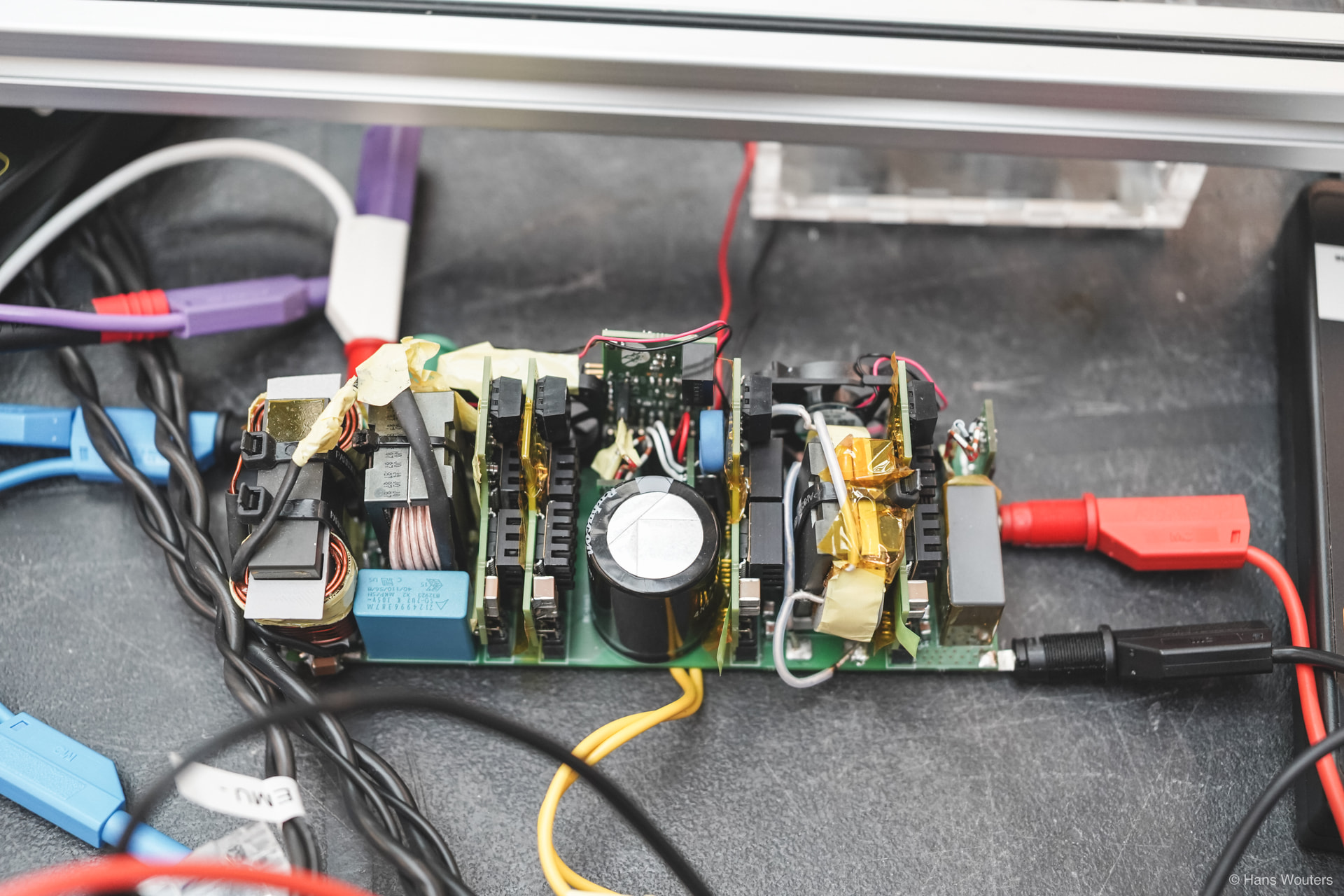
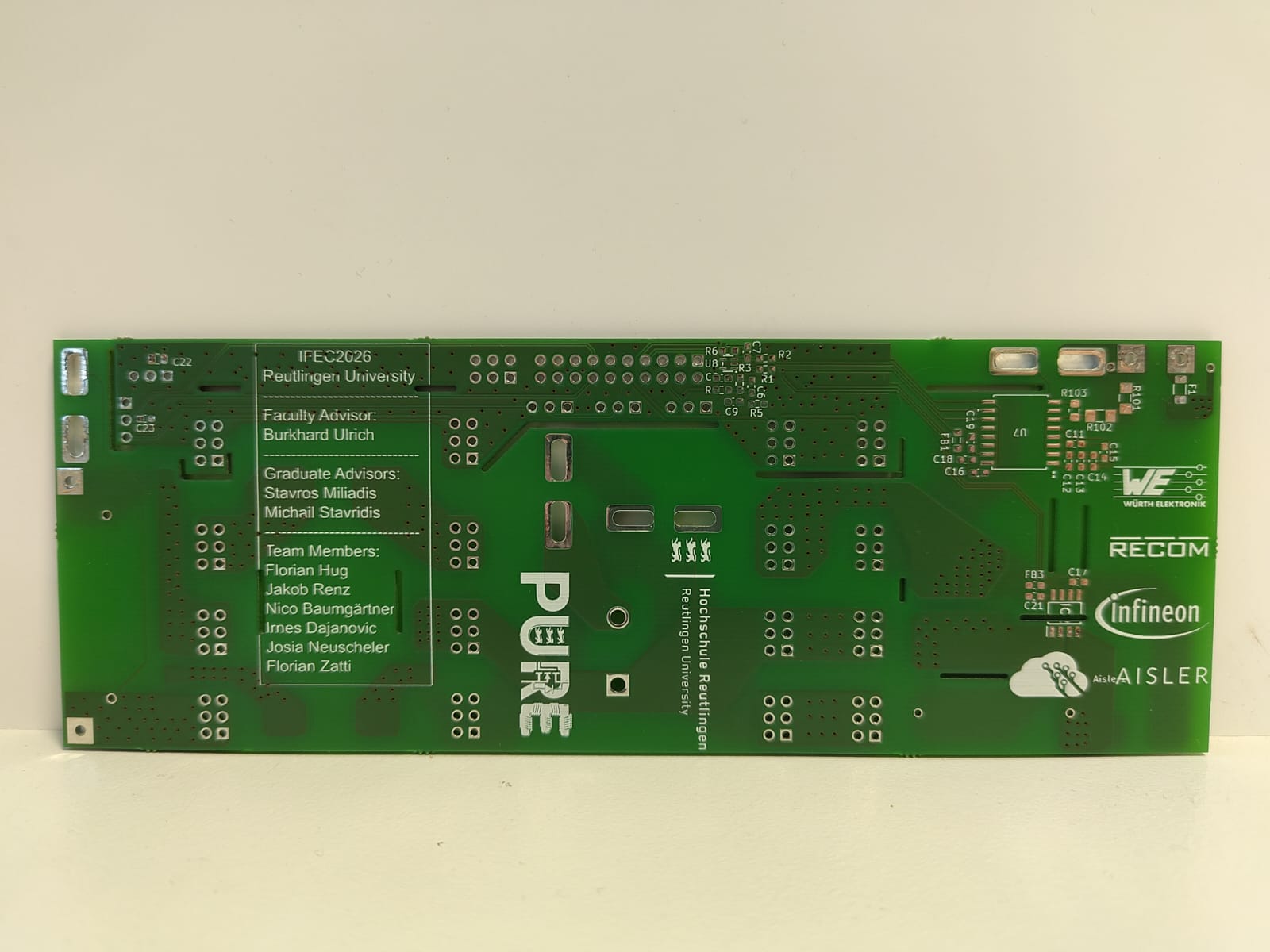
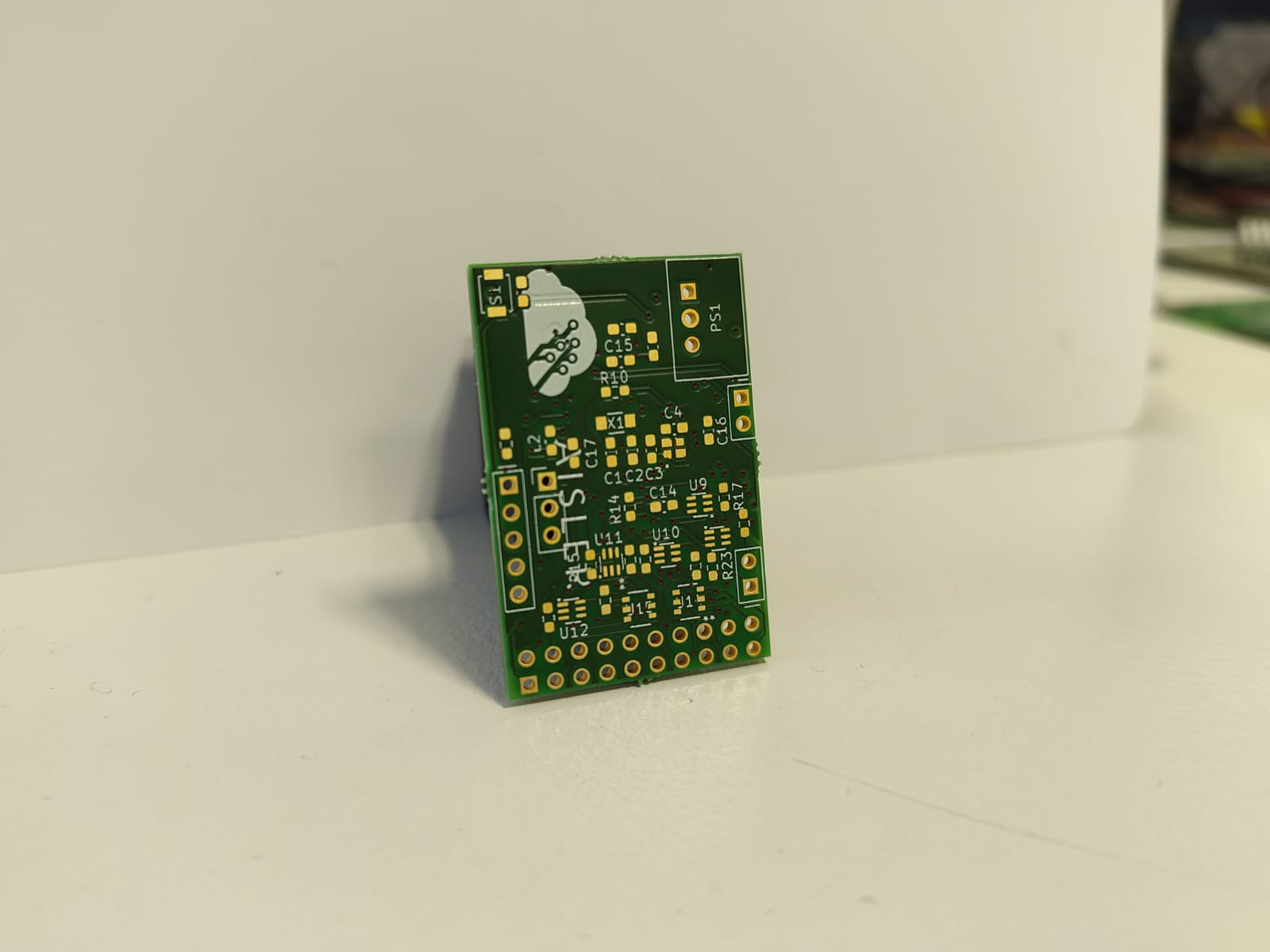
Another ambitious target was a converter volume of 500 mL. Our final prototype measured approximately 570 mL. AISLER’s support was important in bringing the design to life. The company manufactured our mainboard, four-layer microcontroller board, sensor boards and half-bridge PCBs. Our assembled prototype is shown in Figure 1. The mainboard, and microcontroller board are shown in Figures 2 and 3. A big thank-you to AISLER for the sponsorship and for helping us achieve this result.
The event in Leuven once again showed us that a passion for power electronics is shared around the world, and that this shared passion is at the heart of the competition. The real value of IFEC is not the prize money, but the knowledge we gain, the international connections we make, and the friendships that can grow from them.
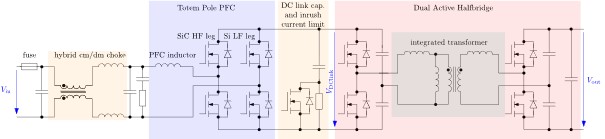
An on-board charger is an AC/DC power converter. Our converter architecture is shown in Figure 4. The first stage is a totem-pole power-factor-correction (TPPFC) converter that converts either 120 or 230 V AC to a 400 V DC link. The second stage, a dual-active-half-bridge (DAHB) converter, converts the 400 V DC-link voltage to a 350-400 V DC output. This topology supports bidirectional power flow and therefore also enables conversion from DC back to AC for V2G operation. We implemented the closed-loop control digitally on an STM32G474 microcontroller. The TPPFC is controlled using average-current-mode control, while the DAHB uses a constant-current/constant-voltage (CC/CV) strategy.
We designed all PCBs using KiCad, an intuitive open-source electronic-design-automation tool. We selected four-layer stack-ups both to reduce board area and to improve electromagnetic compatibility (EMC) through dedicated ground and power planes.
For the half bridges, we used SiC MOSFETs because of their high thermal robustness and low RDS(on). Their thermal robustness was unintentionally put to the test during the competition, but the transistors survived and carried us through to the finish.
In summary, it was an unforgettable week in Leuven and at EnergyVille in Genk, Belgium. We met people who share our passion and experienced many memorable moments while pushing our power-electronics systems to their limits.
Stay tuned for future updates! The next challenge, IFEC 2027, will begin in September 2026.