Introduction
We’re the Club Robot of INSA Rennes, part of the student association AEIR (Association of the students of INSA Rennes). Founded in 1998, we’ve been competing in the French Robotics Cup ever since, this event organised by Eurobot and Planète des Sciences is one of the largest gatherings of engineering students in Europe, drawing over 200 teams from universities and engineering schools all across France and even beyond French borders.

Our team is made up of around 15 students from different fields such as computer sciences, electronics, mechanical engineering, telecommunications, and more. Some of us are first-year students learning the ropes; others are in their final year. That mix is what makes the club work, indeed knowledge transfer is at the heart of what we do.
The project
Each year, the French Robotics Cup introduces a brand-new theme. In 2026, the scenario Winter is Coming revolves around squirrels racing to hoard hazelnuts before winter.
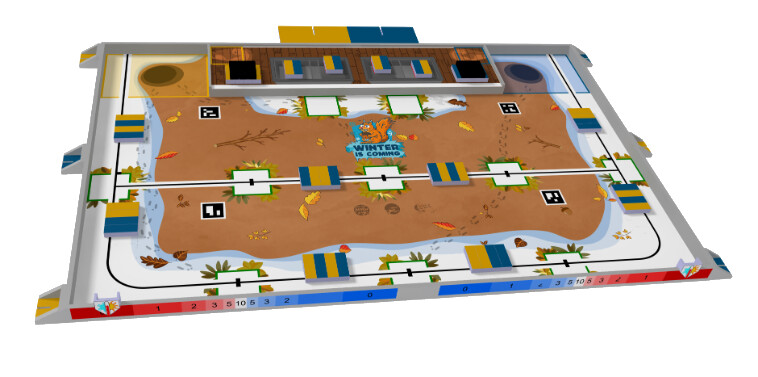
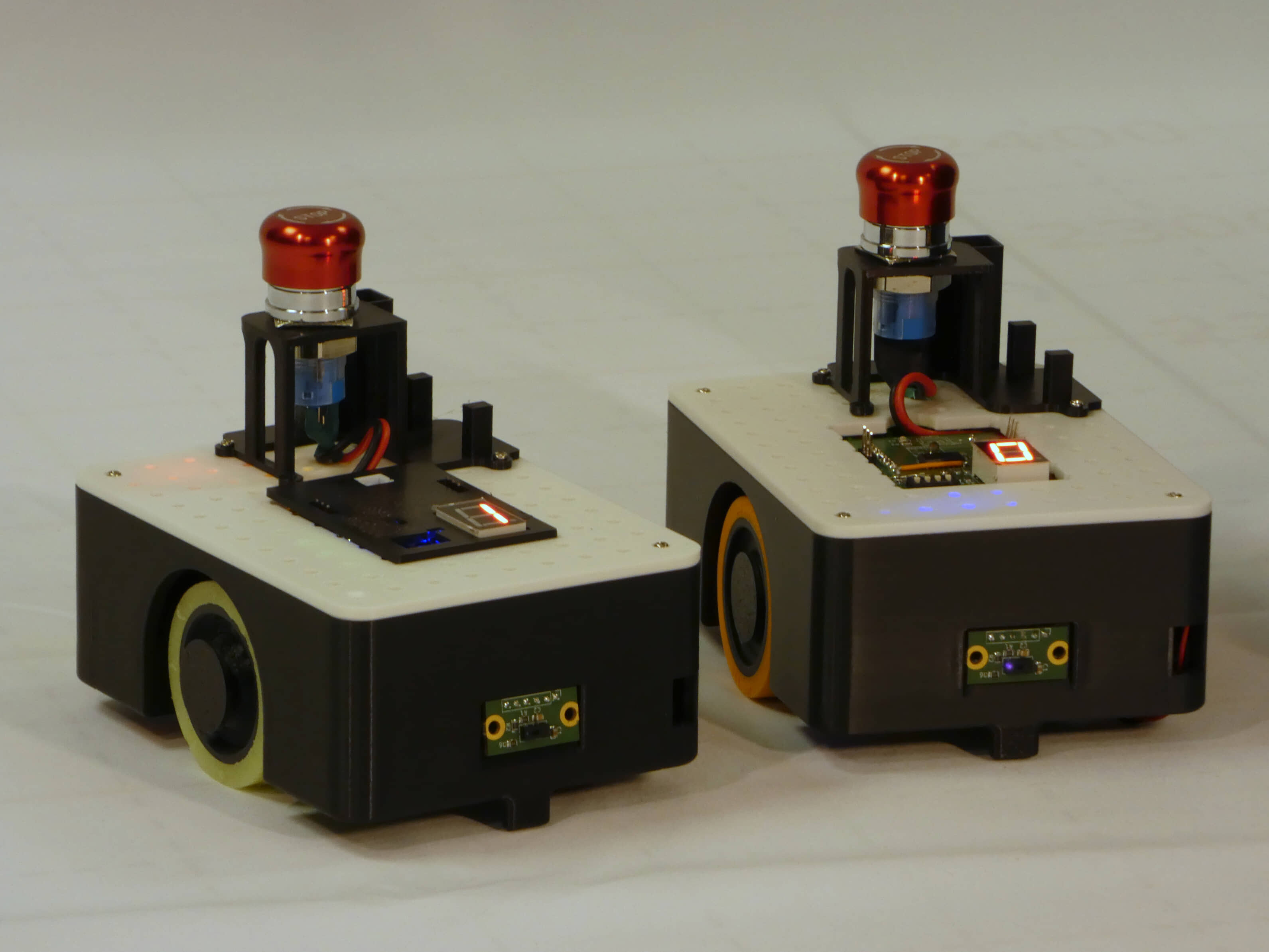
Two teams are competing on a shared game board, scoring points in 100 second matches without any human interference. Each team requires a main robot and can have as many as 8 SIMAs. A SIMA is a Small Independent Mobile Actuator. It’s a small autonomous robot that is deployed 85 seconds into the match and must reach a specific area of the game board before time runs out to score points.
The electronics
The electronics are divided in two part : the main board and the extension board. Our goal was to build a solid, reusable, and flexible electronics foundation that could serve future editions of the cup. For this reason we co-created with the team working on the main robot a standardised extension format that can be added on the SIMA to provide new features.
Main printed circuit board
This board is the main component in the SIMA’s architecture.
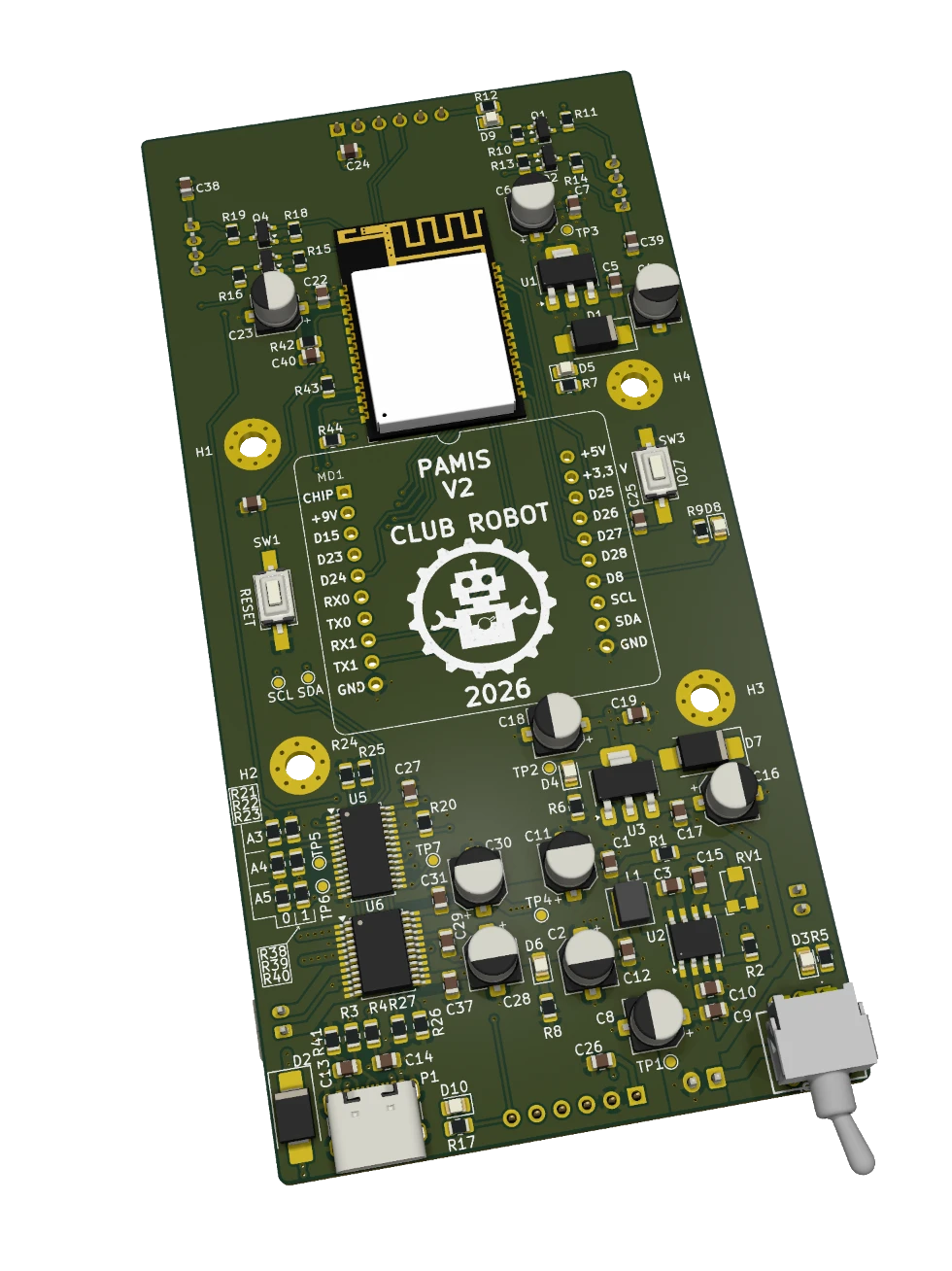
The “brain” of the board is the ESP32 C5 WROOM, a powerful 32-bit single-core RISC-V microprocessor produced by Espressif. This microprocessor is an excellent choice for flexibility, supporting dual-band Wi-Fi 6, Bluetooth 5 LE, Zigbee, and Thread, giving us multiple options for inter-robot communication.
The robot’s power source is a simple battery that provides 9 volts. This voltage is then converted to 3.3V for the microcontroller. For the power-hungry motors, a 5V voltage is generated using a buck converter to improve efficency. A status LED after each converter provides visual confirmation that the supply is active.
The “eyes” of the robot are two distance sensors located at the front and back of the robot. The front sensor is a VL53L7CX Time-of-Flight (ToF) 8x8 multizone ranging sensor designed by STMicroelectronics. This sensor allows us to detect surrounding objects across a wide field of view and inform the robot’s decision-making.
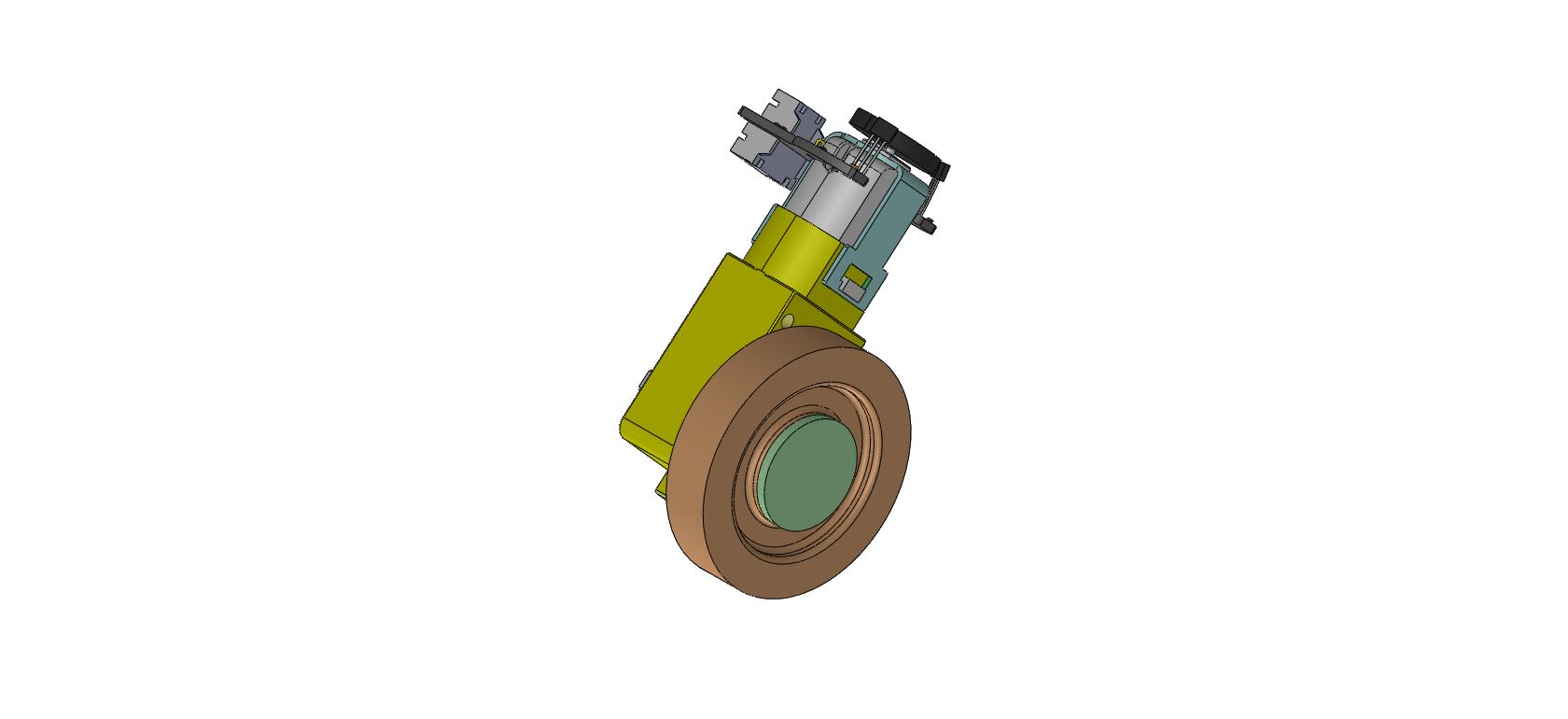
The robot can move thanks to a built-in driver that supplies power to the motors. Both motor modules contain relative encoders that enable closed-loop control of the robot’s of both speed and position.
Extension printed circuit board
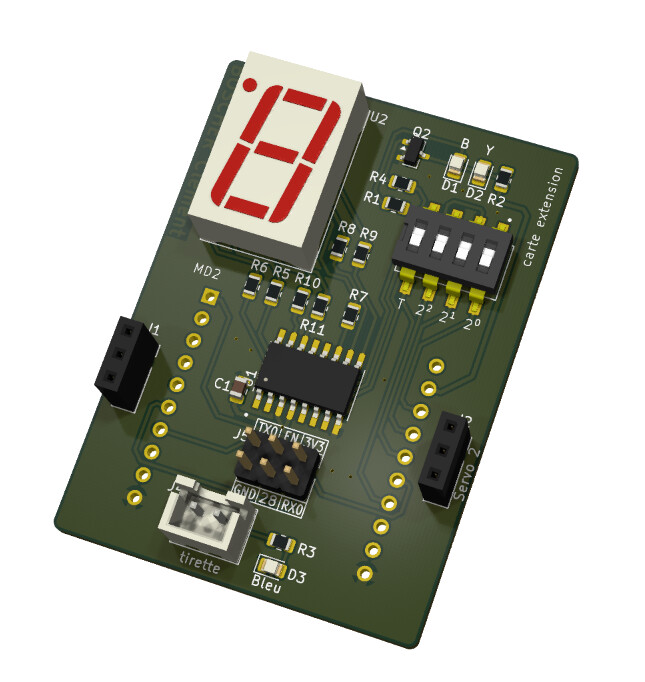
This is the extension designed for this year needs. Since we had 8 SIMAs this year, we needed a way of selecting a movement strategy to avoid having to flash a different firmware to each individual SIMA. This was done by using three switches to encode the number in binary. The last switch (of the row of four) was used to select the team (0: yellow, 1:blue). For instance 1 011 corresponds to the strategy of the 3rd SIMA (011) of the blue team (1). A 7-segment display and colored LEDs provide direct visual feedback on the robot’s configuration.
This year’s rules required the SIMA to perform a “small action” at the end of the match
so we added a connector for a servo motor.
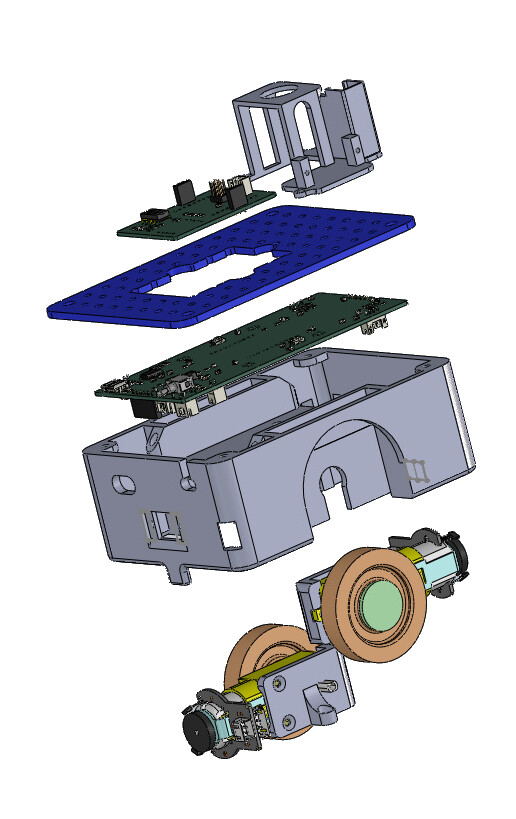
Finally we created a 3d printed enclosures to finish the robot.
Our favorite AISLER features!
-
Delivery speed. Being based in Rennes, France, the geographical proximity to Aisler means that our boards arrive fast which matters a lot when you’re iterating under competition deadlines.
-
Blitz service has been a genuine lifesaver. When you’ve just spotted a bug and need to re-spin a board quickly, knowing you can get PCBs back in days rather than weeks changes how you work. It gives you the confidence to iterate rather than second-guess every design decision.
-
The KiCad integration fits naturally into our workflow. No export headaches, no format gymnastics, just a smooth path from schematic to order.
What’s something that went wrong?
A pull-up resistor was forgotten on the RESET pin of the microcontroller… This component was essential for the proper functioning of the circuit. After investigation, we located the problem and had to design and order a revised PCB.
We can say thank you to AISLER who was able to quickly manufacture the revised PCB, allowing us to obtain a functional electronic system.