Hi everyone! We are Loc.KA.engineering e.V.,
an interdisciplinary student team from the Karlsruhe Institute of Technology (KIT). Our mission is to design and build innovative railway technology for the European Railway Challenge (https://railwaychallenge.eu/) , where students develop, build and test small scale locomotives.
To achieve this, we develop almost everything ourselves—from mechanical components and embedded software to custom electronics. Designing our own PCBs allows us to tailor every subsystem exactly to our requirements while gaining valuable hands-on engineering experience.
Our Digital End-to-End Philosophy
One of the key features of our locomotive is its digital end-to-end architecture. Every functional module is connected via CAN bus, replacing traditional point-to-point signal wiring.
This provides several benefits:
-
No “dumb” cables – only power and digital communication.
-
Full system visibility – every module reports its status and diagnostics.
-
Reduced wiring and simpler assembly.
-
Easy module replacement and future upgrades thanks to the modular network architecture.
To simplify integration and improve reliability, we developed our own Loc.KA.bus standard for connecting electronic modules throughout the locomotive.
The standard defines:
-
A common locking connector and pinout for all modules
-
A daisy-chain topology, reducing wiring complexity while making the system easy to expand and maintain.
By standardizing the electrical interface, new modules can be integrated quickly.
Smoke Sensor
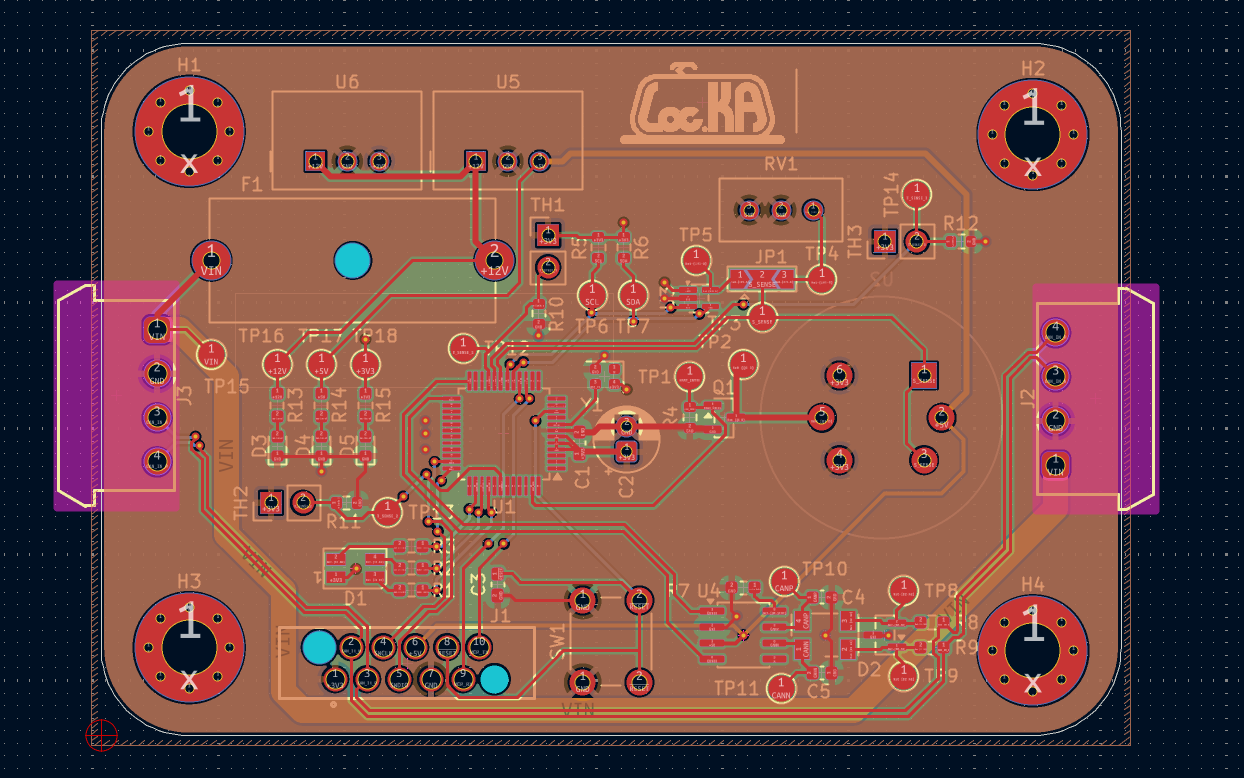
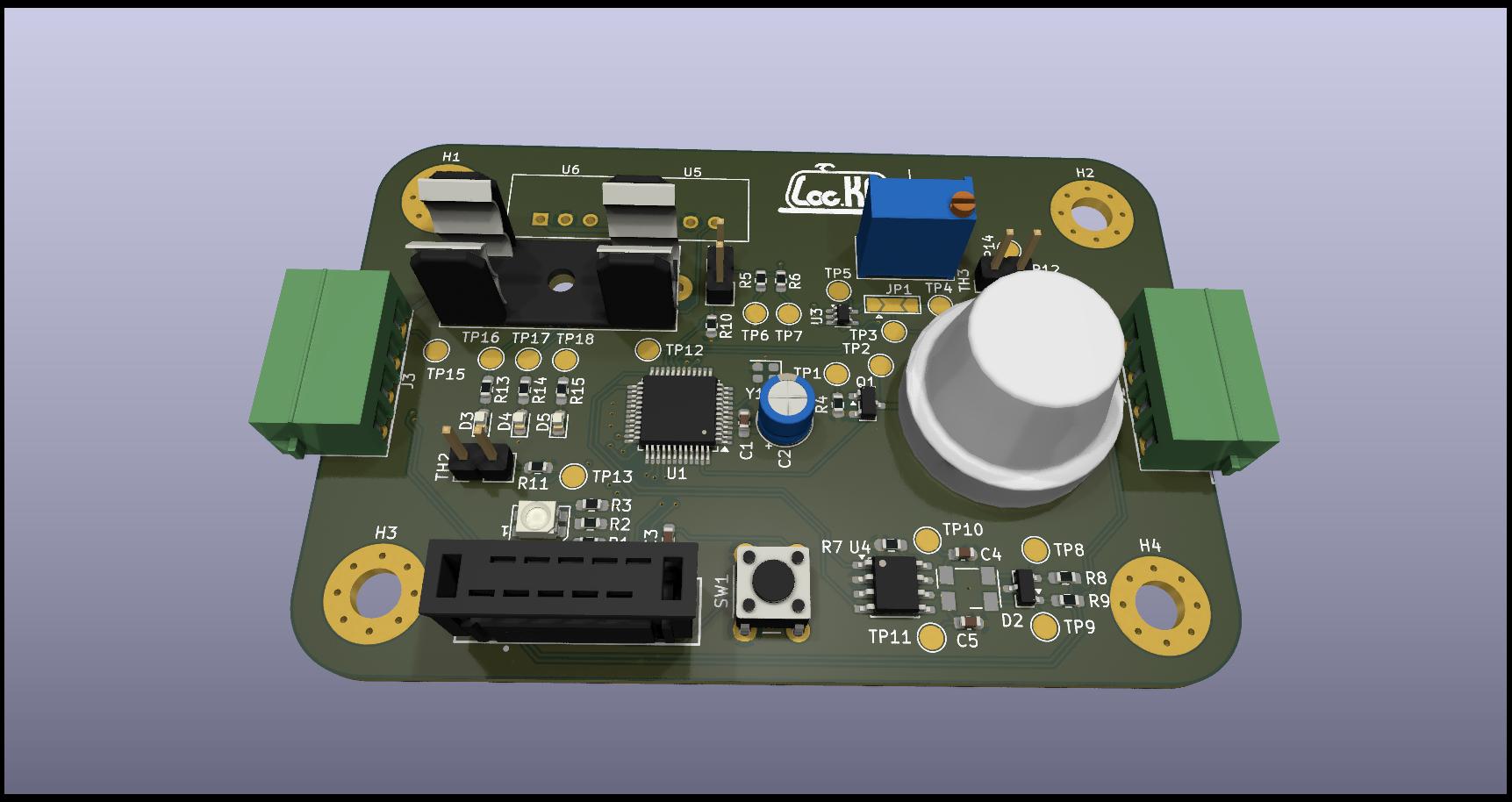
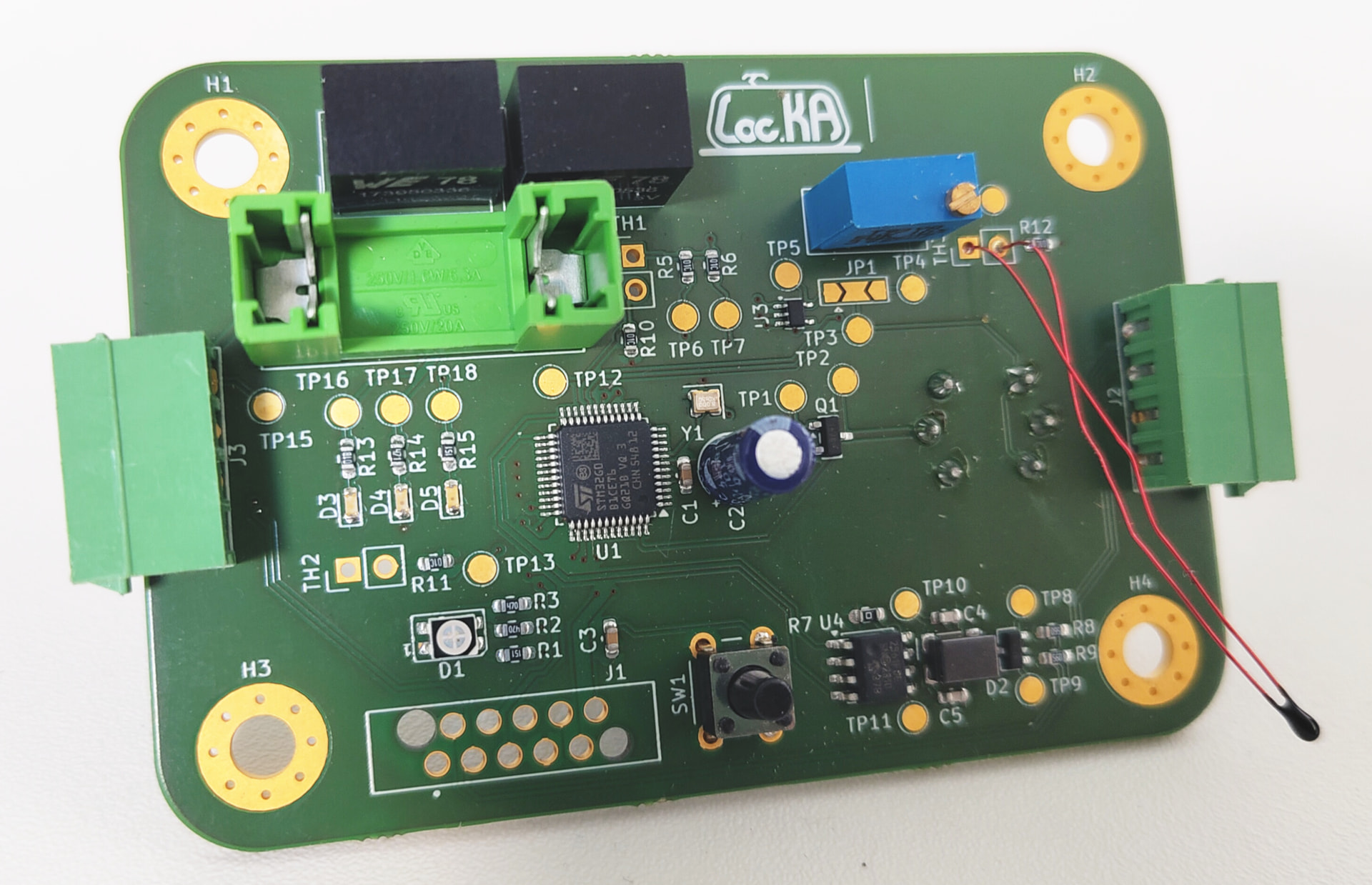
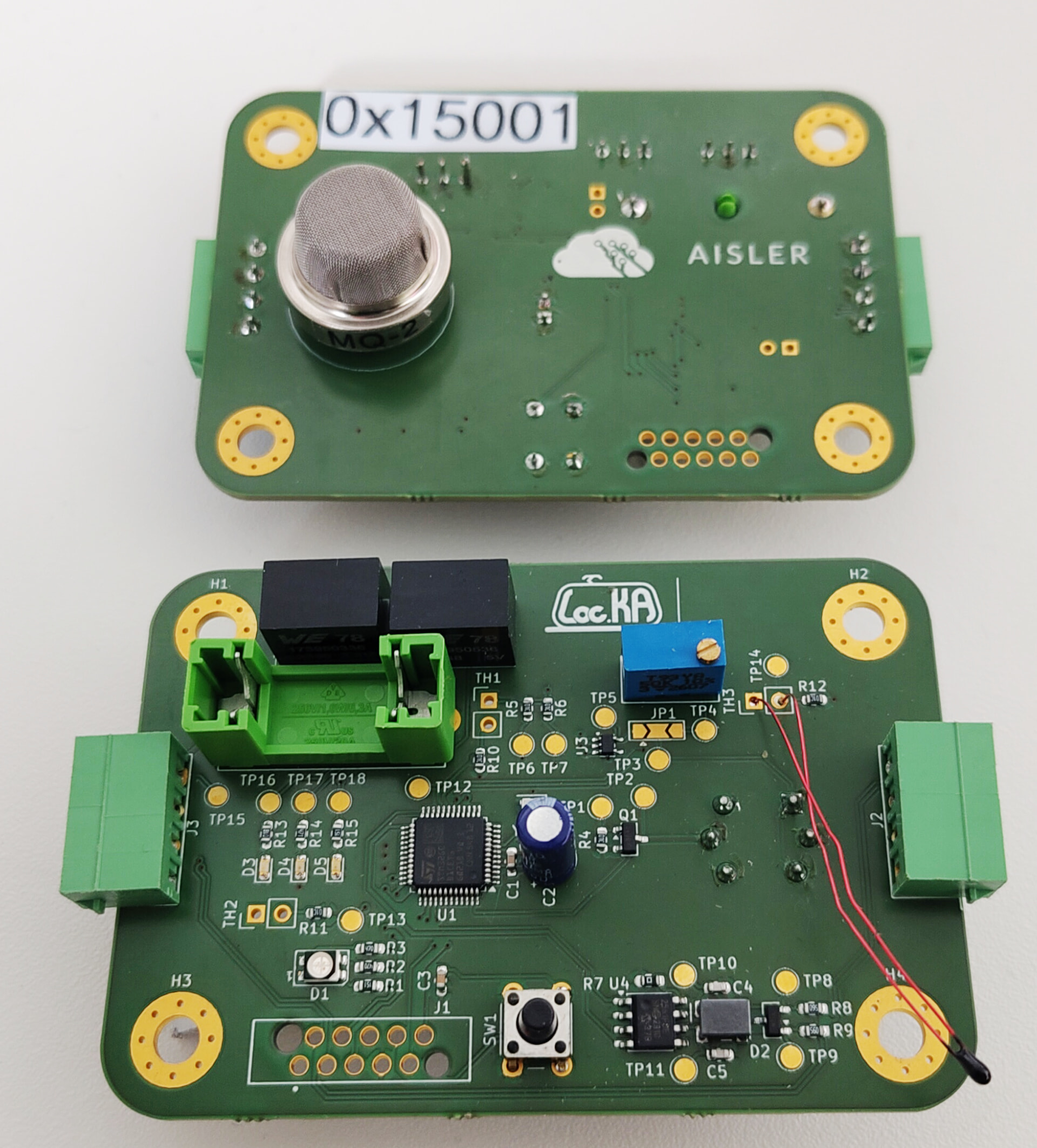
The Smoke Sensor PCB is built around an MQ-2 gas and smoke sensor for early detection of smoke and combustible gases.
To complement the gas sensor, multiple NTC thermistors continuously monitor the ambient temperature, improving overall reliability and enabling better hazard detection.
An STM32G0B1 microcontroller handles sensor processing, diagnostics, and CAN bus communication.
To maintain optimal sensitivity under varying environmental conditions, the analog front end features automatic gain adjustment using an MCP4019 digital potentiometer.
Why AISLER?
Thanks to AISLER’s streamlined and modern approach, our PCBs were manufactured with excellent precision and delivered quickly, allowing us to iterate on our designs without long delays.
The integrated PCB Viewer helped us verify our layouts before ordering, while the consistent manufacturing quality gave us confidence that each revision would perform as expected. For a student team working on tight schedules and frequent hardware iterations, this fast and reliable workflow is invaluable.