Photo: Bart van Overbeeke
Project overview
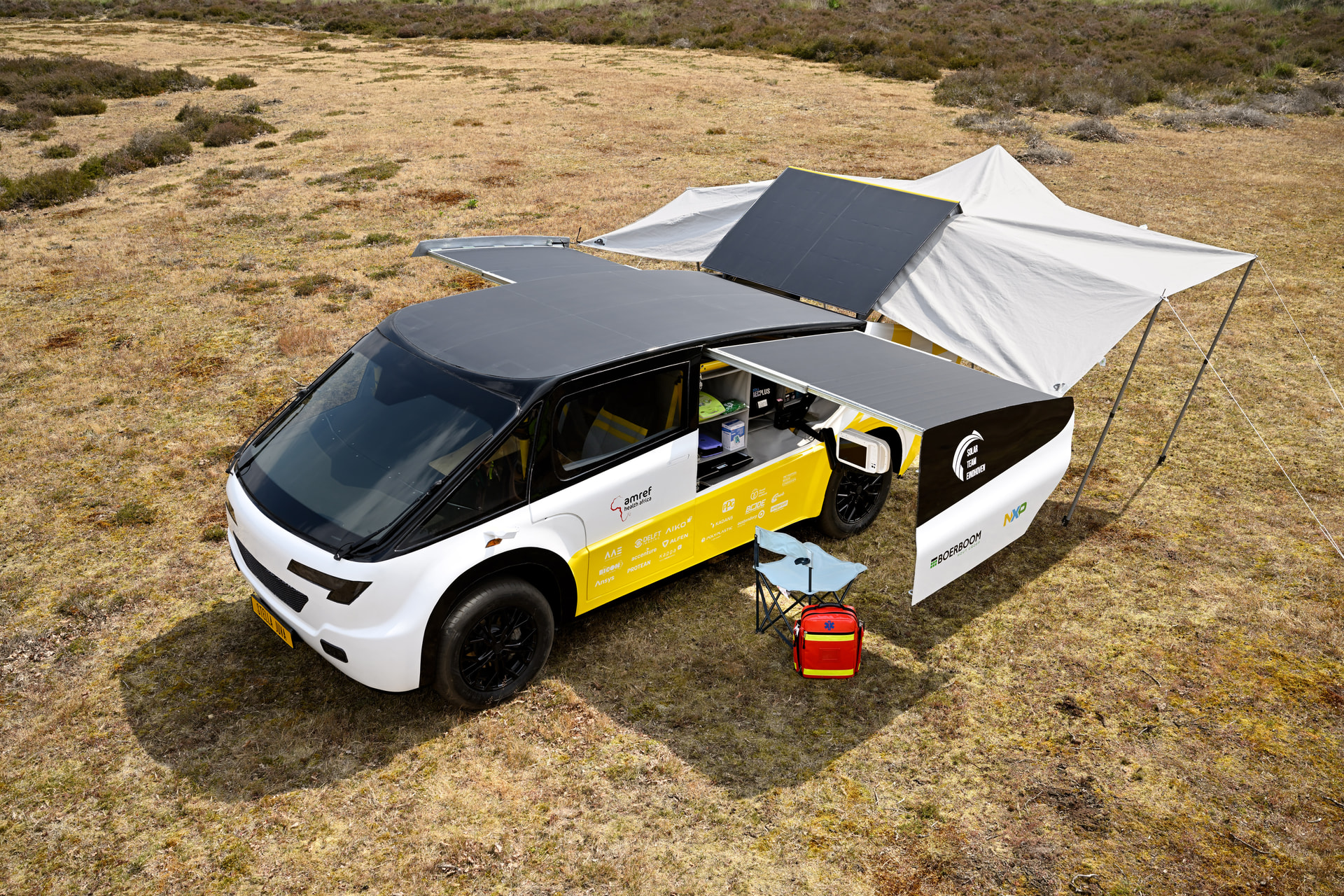
This year, Solar Team Eindhoven, a team of 23 students from the Eindhoven University of technologies is building Stella Juva: the world’s first solar-powered ambulance.
By relying purely on the power of the sun, Stella Juva can both drive as well as power its medical equipment entirely independent of the energy grid. This enables Stella Juva to provide medical care anywhere in the world, even in remote and hard-to-reach areas.
In August 2026, the solar ambulance will be used by the team, visiting multiple field locations of NGO Amref to show how Stella Juva can use, charge, and safely support patient care with medical equipment. The team aims to demonstrate that sustainable healthcare is accessible in locations that are normally hard to reach for conventional emergency services.
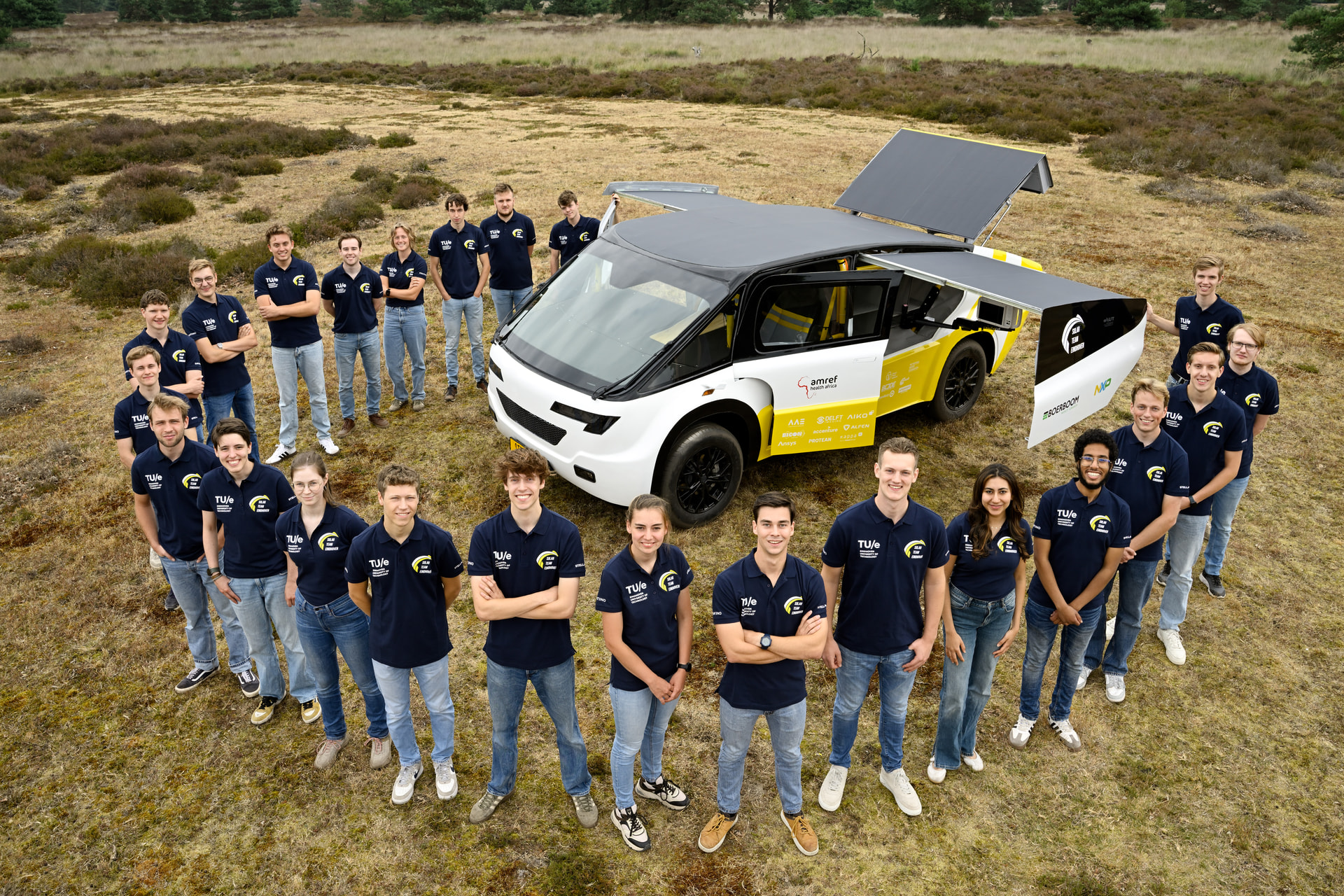
Photo: Bart van Overbeeke
The challenge
Building this car from the ground up proves to be challenging. Combining the requirements of having a vehicle that is able to drive long distances, as well as power its medical equipment, efficient use needs to be made from the solar panels on Stella Juva’s roof. A completely new electrical system had to be designed, including many in-house designed PCBs that are manufactured by Aisler.
RAC
A key PCB in this system is the RAC (Rear Auxiliary Controller), which controls all the electronics in the rear of the ambulance. This includes functions like the taillights, some of the medical equipment and other functions that are essential to our mission of providing medical care anywhere in the world.
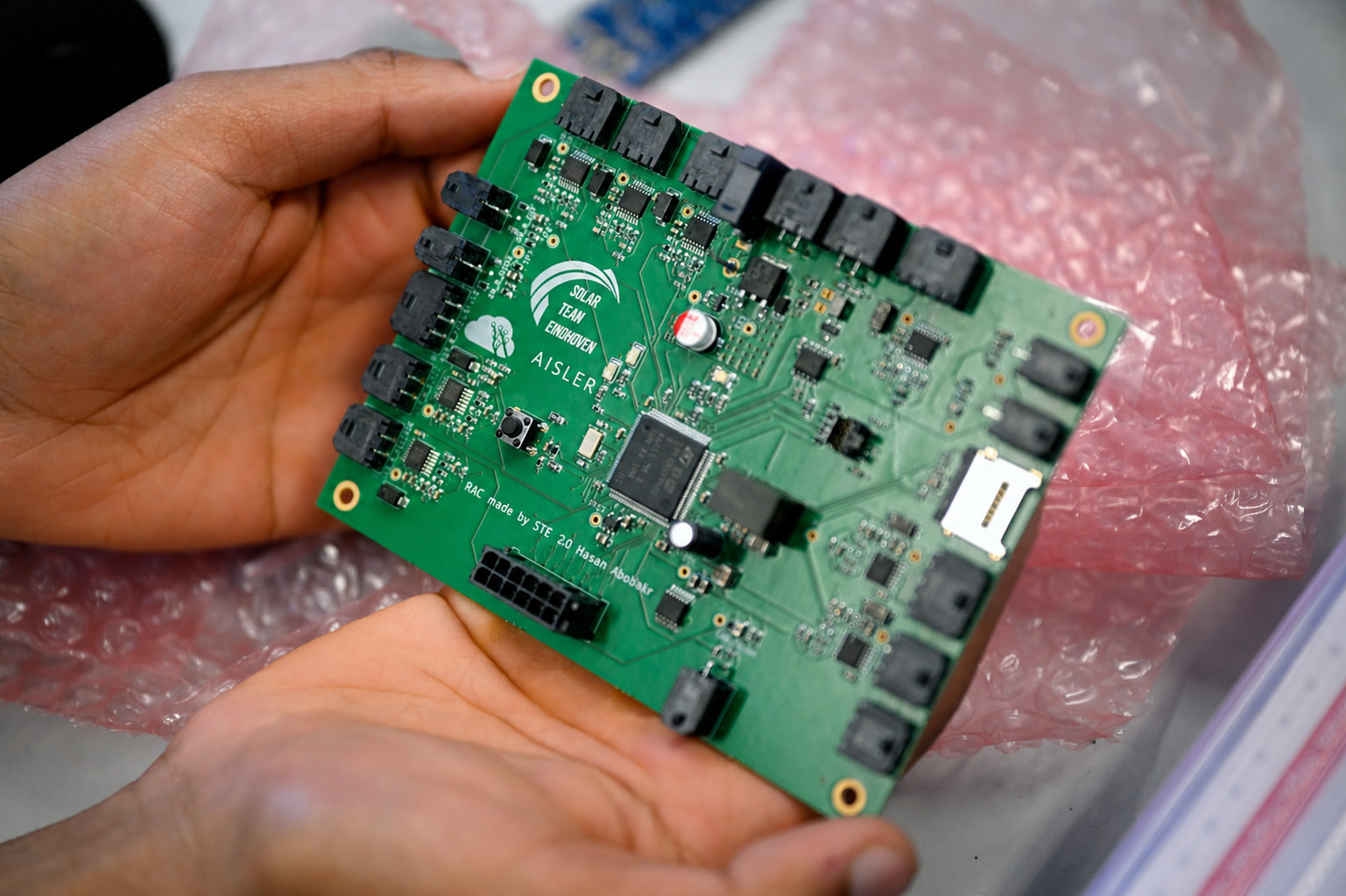
Photo: Solar Team Eindhoven
The RAC PCB, responsible for controlling the vehicle’s rear auxiliary systems, required a highly compact and precise design. With connector pin spacing of just 0.4 mm and pin
widths of 0.18 mm, the layout demanded manufacturing accuracy down to 0.22 mm clearances. Achieving this level of precision while maintaining a dense component placement was critical to fitting all required functionality within the available space. Aisler played an important role in the successful realization of the RAC PCB, enabling the combination of high precision, compactness, and reliability required for this application.