Hello AISLER Community,
We are TU/ecomotive, a student team from the Eindhoven University of Technology working on innovative concept cars for a more sustainable future of mobility. This year, our concept focuses on actively reducing particulate matter from the air, and as part of that effort we are developing many of the electronic systems ourselves.
In the embedded systems department, we recently finished another important PCB: our custom Shield PCB for the NXP FRDM platform.
This board acts as the interface layer between the controller and the rest of the vehicle electronics. It brings together the signals from the FRDM board, includes a second CAN channel, and provides connections for future sensor integration. It also routes outputs for sensors, PWM-based signals, and additional low-voltage power distribution needed by the system.
An important feature of this shield is that we can select the power source through jumper pins, which gives us more flexibility during development and testing. We also implemented level shifting, because some of our LED-related peripherals require 5 V logic, while the FRDM platform outputs 3.3 V logic. In practice, that part turned out to be simpler and easier to implement than we initially expected.
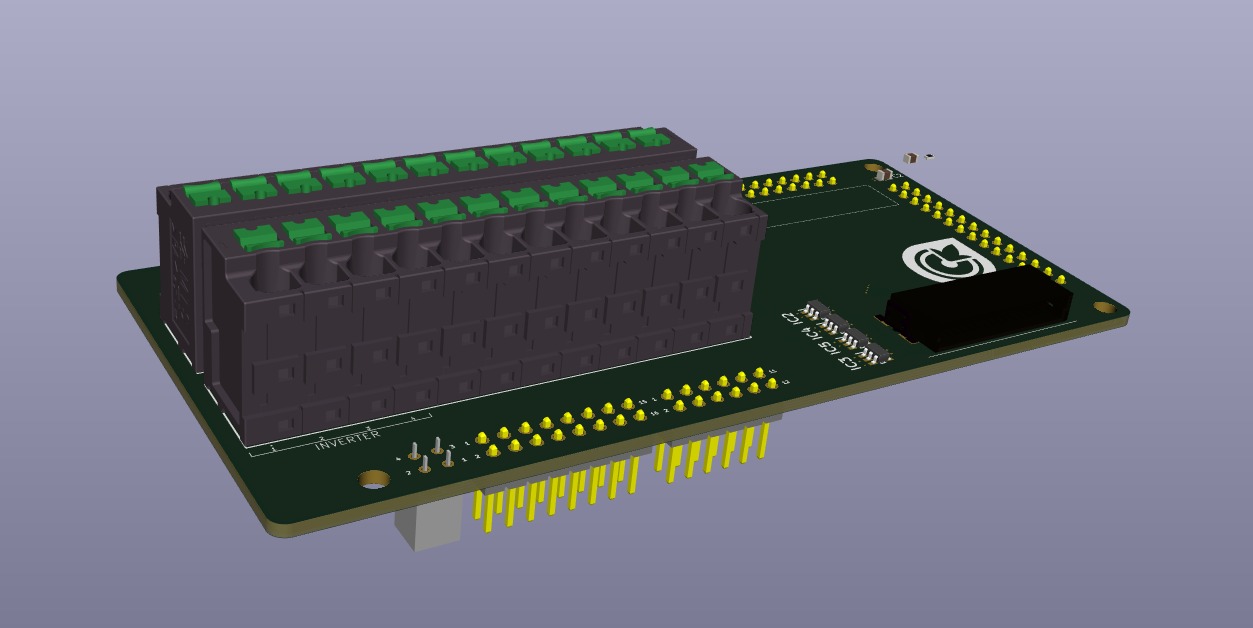
For this board, mechanical compatibility was just as important as the electronics. Since it is a true shield, the exact pin layout and board cutout had to match the FRDM platform precisely. One of the most interesting things we learned during this process was that it is possible to import PCB data from Cadence Allegro into KiCad 10. That made the mechanical side of the shield design much more manageable and was honestly fascinating to work with. It helped us define the board outline, connector spacing, and header positions much more accurately.
This PCB taught us a lot about interface design: not only how to connect signals cleanly, but also how important board alignment, spacing, and compatibility are when designing a shield that has to fit perfectly on existing hardware.
We are excited to continue expanding this board with more sensors and embedded functionality as the project progresses.
A big thank you to AISLER for supporting our team with high-quality PCBs and helping us rapidly turn our ideas into working hardware.