Dear Readers,
We are UMD Racing, the Formula Student team from Magdeburg. We are very proud of our completely self developed accumulator which helped us compete in FS France as well as FS Czech.
To achieve this year’s performance we have opted to use cylindrical cells due to their compact form factor. One of our great sponsors BondIQ was kind enough to allocate some time on their highly advanced machines that allows us to do large scale high precision thick-wire-bonding. Since this process enables many options for the safe and reliable packaging of cylindrical cells, we deemed it the best choice.
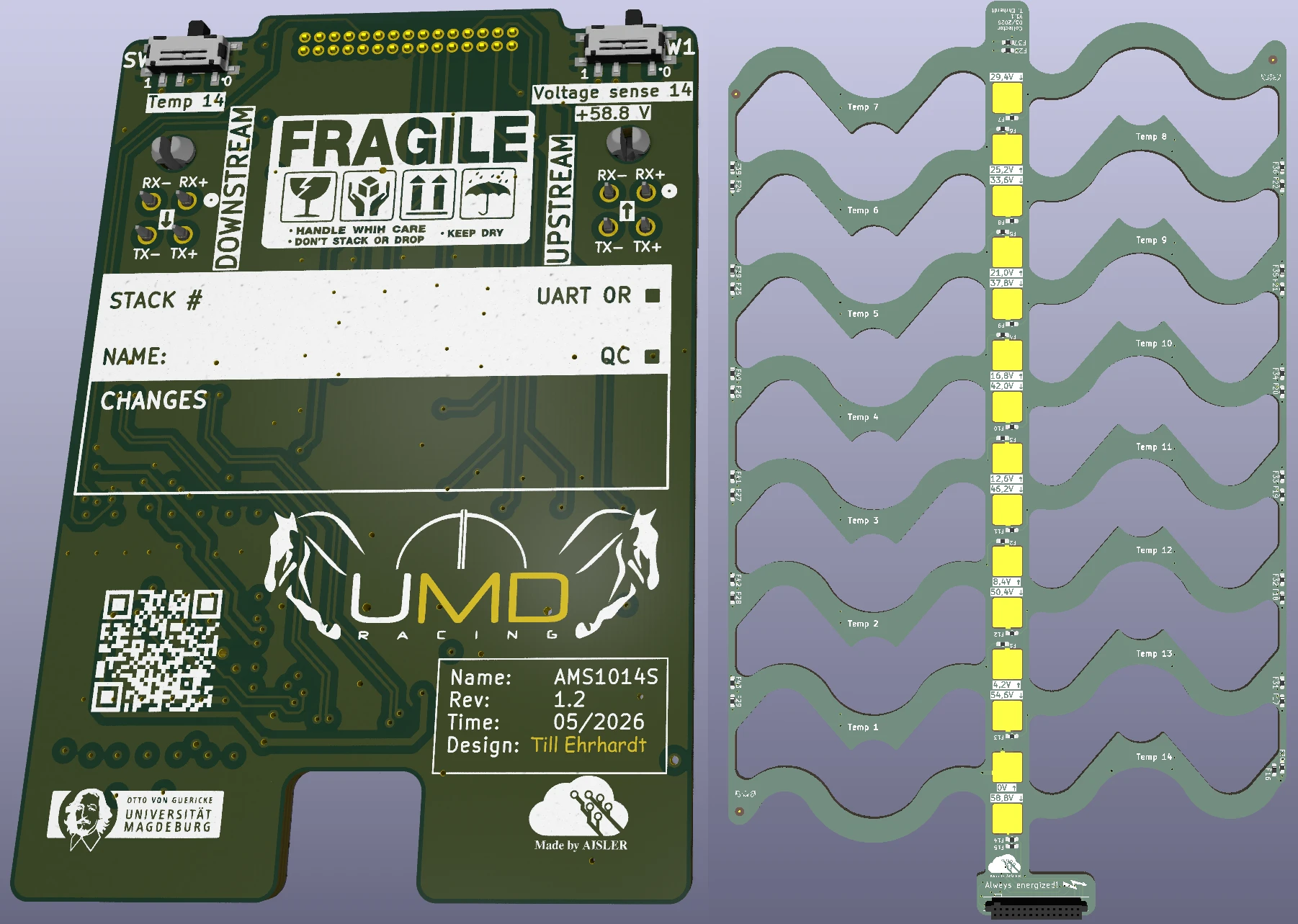
Because the rules require temperature and voltage monitoring, we needed to design a custom solution for getting a temperature read close to the hottest part of the cell as well as 15 voltage measurement points. This is all done across our 14 series 3 parallel cell configuration. This Collector as we call it is only used for grabbing all the necessary data. The actual processing is then done on the attached Cell Monitoring Unit (CMU). Both are connected using the Board-to-Board connector visible on the short side. Each stack has a maximum voltage of 58.8 V resulting in a pack voltage of 588 V. These voltage potentials are also screen-printed on the PCB itself to make debugging easier. Designing these boards is always a compromise between electrical requirements, manufacturability and the available space for the entire accumulator container. A PCB may work perfectly under testing conditions, but fail because the Board-to-Board connector pins are wired incorrectly. For this reason, attention to detail and system understanding is of utmost importance. This is also why careful version management is so important to us. Our personal favourite AISLER feature is the direct connection between an AISLER project and the KiCad design file. If we discover a necessary last-minute correction and manufacturing has not yet started, we can update the project with the revised design. When working on a race car under time pressure, that flexibility can make a real difference.
I would also like to mention the space constraints imposed upon each module due to a fixed chassis design. Therefore we had to compromise have very thin bridges on the edge that are just 1.5 mm wide.
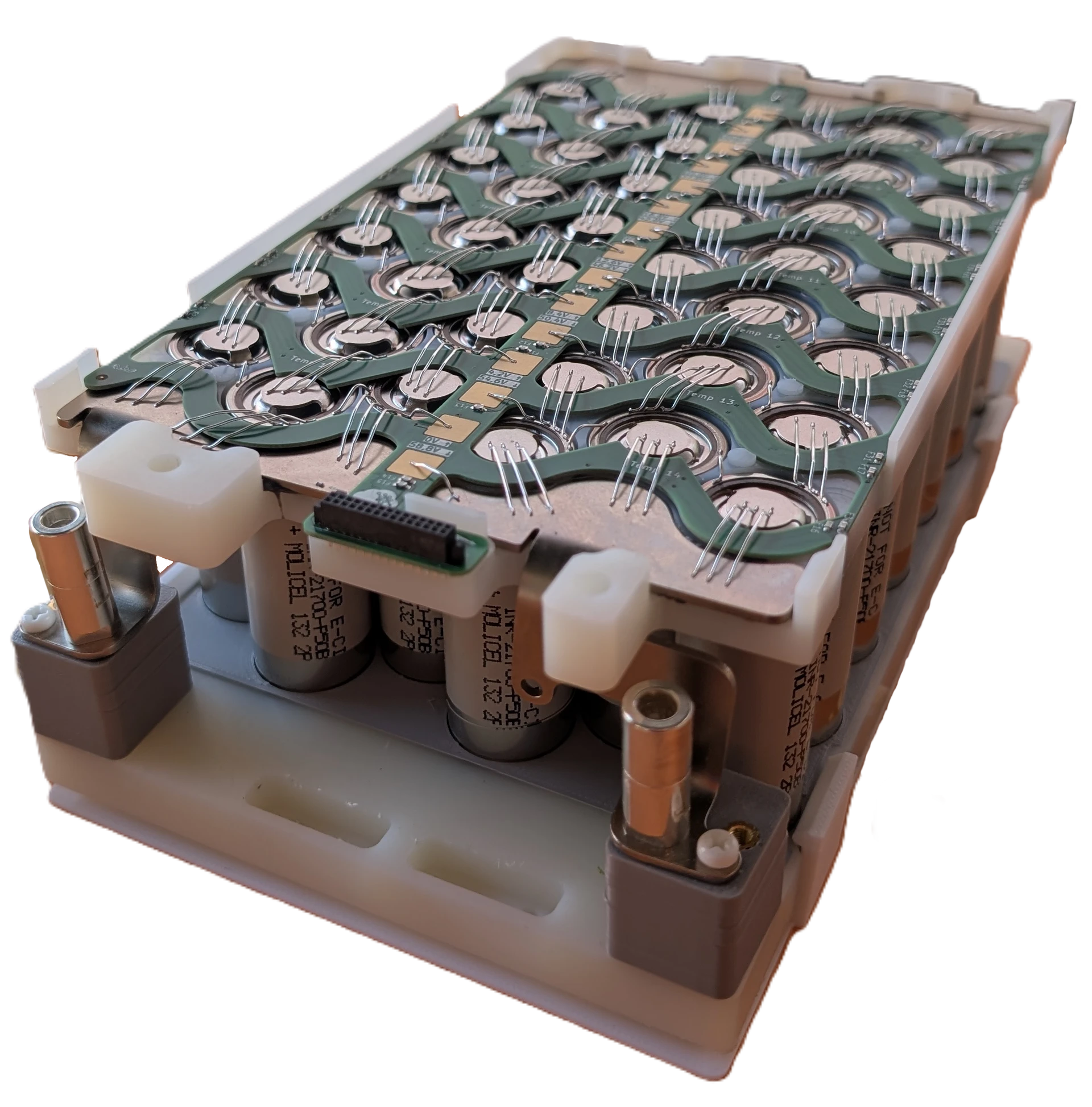
The wire bonds themselves also present a risk of easily short-circuiting a cell. This is because the wires run only a few millimeters above a neighbouring potential. To prevent the wires from being crushed, we needed to install an insulation barrier. Needing to measure the temperature close to the cells anyway, we used the 0.8mm thick manufacturing option. Since we also wanted to have no copper that could be exposed by simply scraping off the solder mask, we also chose to keep all critical traces on the internal layers of the four-layer stack-up.
So in total, we had the following requirements:
- 4 layers
- 0.8mm thick
- 1.5mm smallest PCB width
- 230mmx120mm of total area
We needed ten of these complicated PCBs, excluding potential spares.
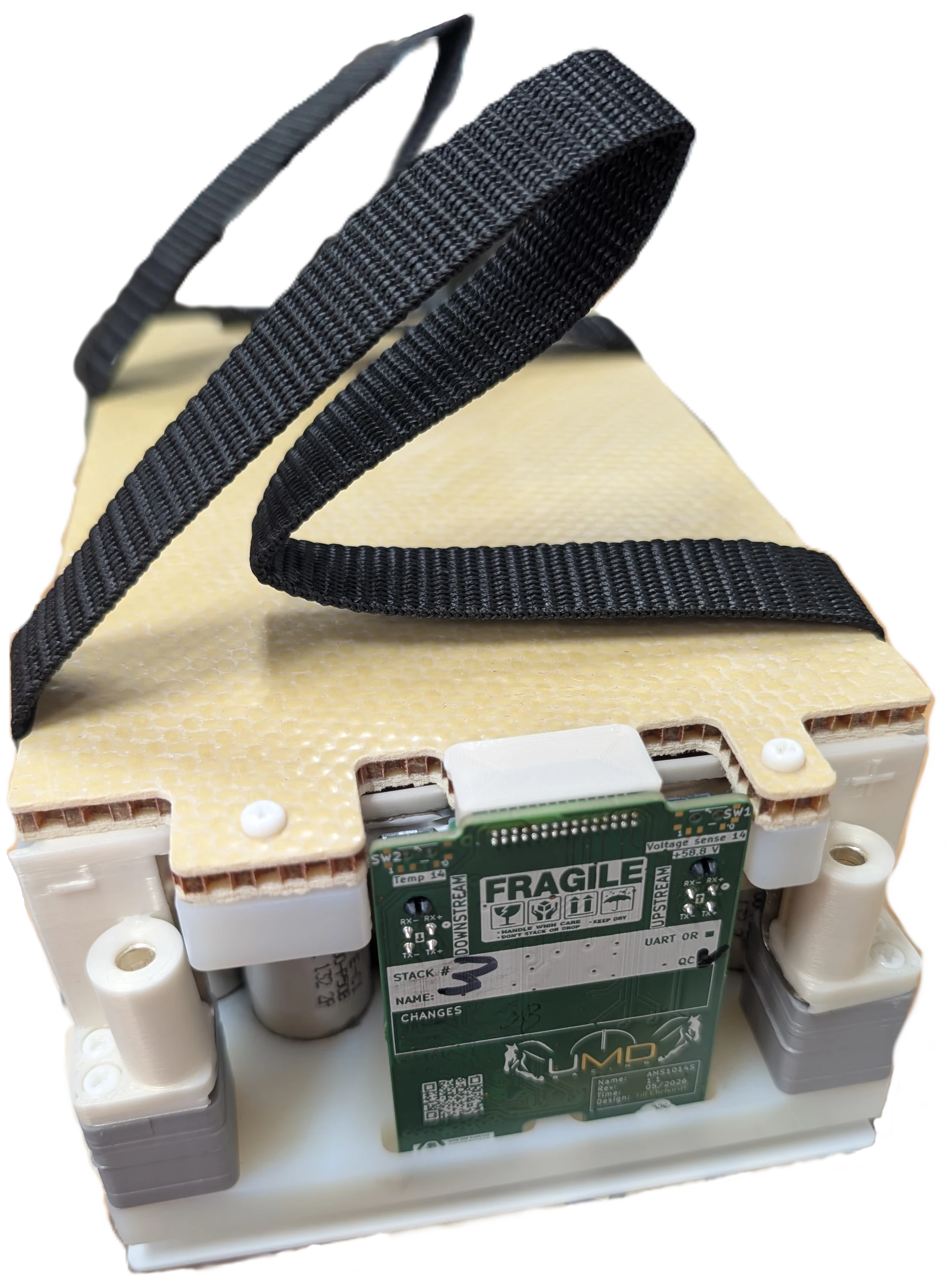
After getting the finished PCBs in our hands we got right to it and soldered all the passives on them. After reflowing was done and all soldering errors were fixed, we glued one PCB on top of each module. Once the glue was hardened they went straight to wire bonding where each bond could be placed just as planned. Fortunately, everything worked and we were ready to test them with the CMUs and take our fresh accumulator out to the track.
At Formula Student Czech Republic, we passed Accumulator Scrutineering on our first attempt for the first time in UMD Racing’s history. We were also able to participate in all manual dynamic disciplines and finished the demanding 22 km Endurance in tenth place. Those results depended on many different systems working together.
Without AISLER’s Blitz production service and enormous sponsoring support, we would not have been able to make it possible. We learned so much through failures and the successful deployment of our modules. Thank you AISLER!
If you are interested in finding out more about UMD Racing, be sure to check us out @umdracing20