LibrePCB

In case you’re searching for a way to import your EAGLE projects and libraries to LibrePCB, jump to the tutorial here.

Overview

We support two methods of uploading your LibrePCB project, you can either use the integrated order function or directly import LibrePCB .lppz archive files. Both methods support assembly and electrical testing.

Important Note

We prepare your design files for manufacturing using an automated software pipeline, if you have any questions or want to make remarks, please contact our support before ordering, as we do not read notes included in your project files.

Design Rule Check

Before submitting your design, you should run a Design Rule Check to ensure that your design complies with our manufacturing capabilities. In the new interface, you can find the DRC settings in the Board Setup under Project → Board Setup… → DRC Settings .
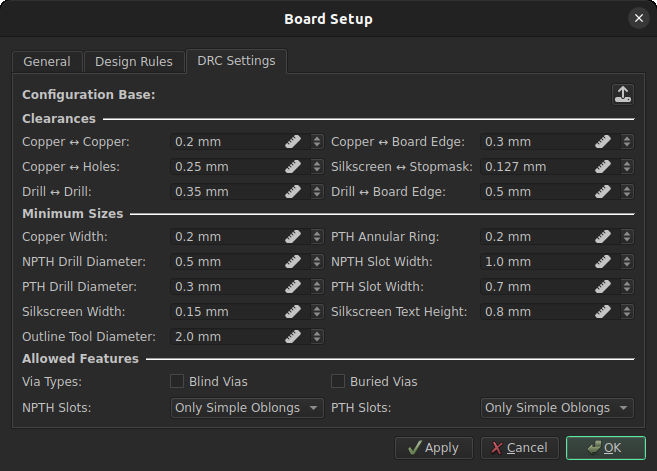
New in LibrePCB 2.0.0: It is now possible to import predefined design rules . By clicking the import icon, you can, for example, load the “LibrePCB Fab: Standard” rules, which are already configured for simple PCBs.
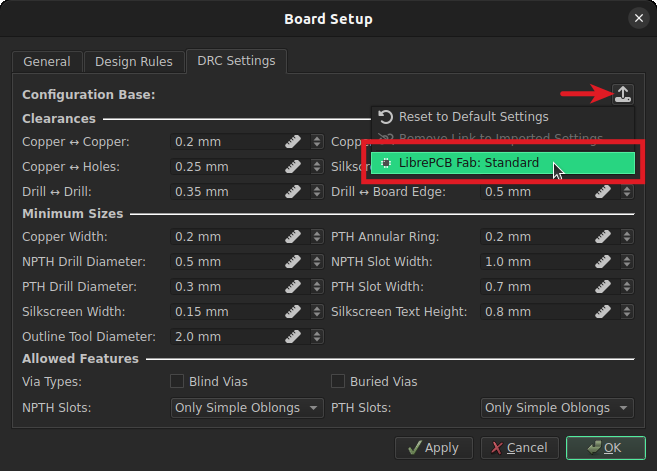
We recommend to use our manufacturing capabilities, they can be found here: PCB Design Rules
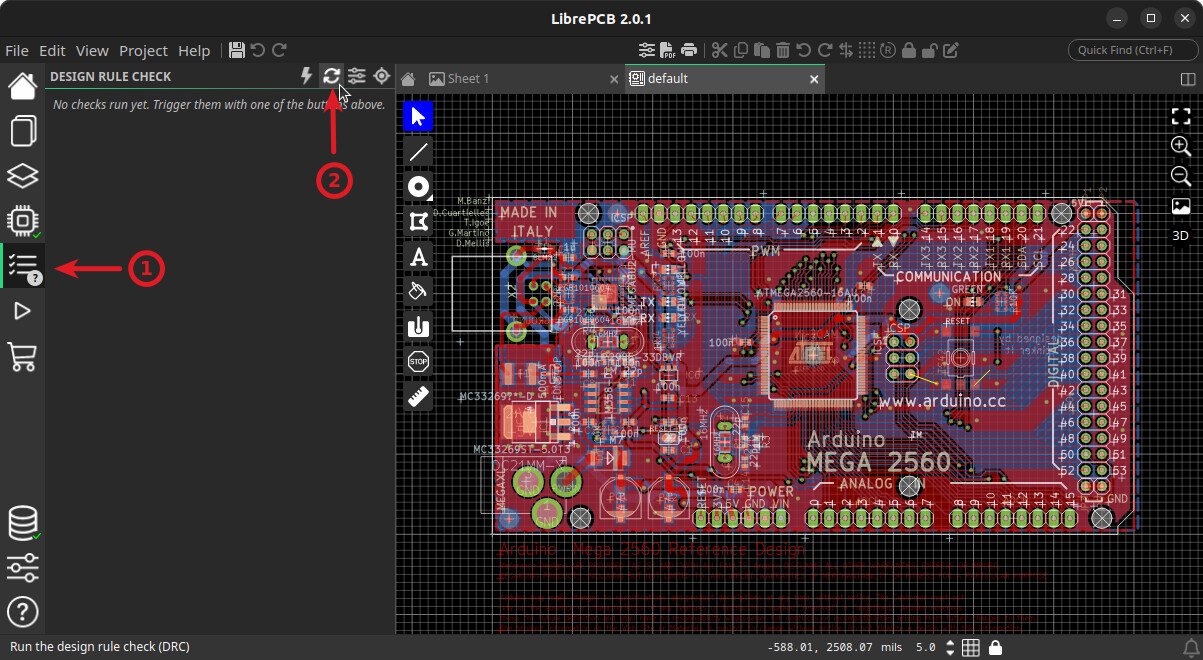
Run the Design Rule check by navigating to Board → Run Design Rule Check.
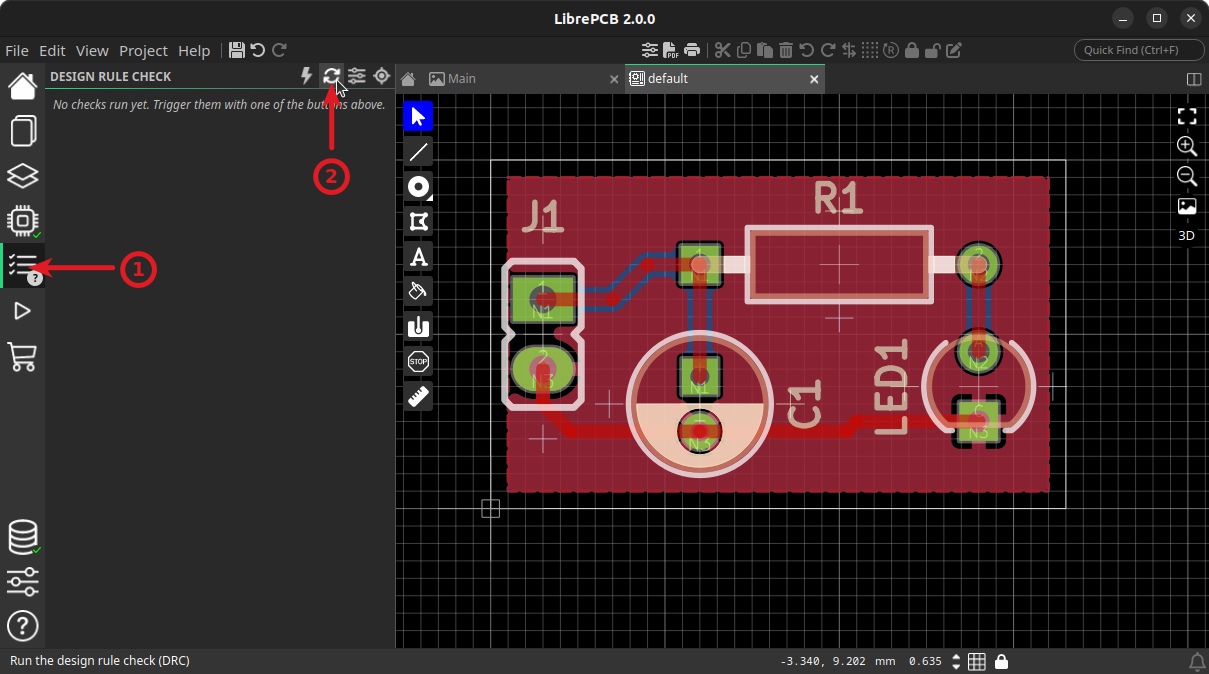
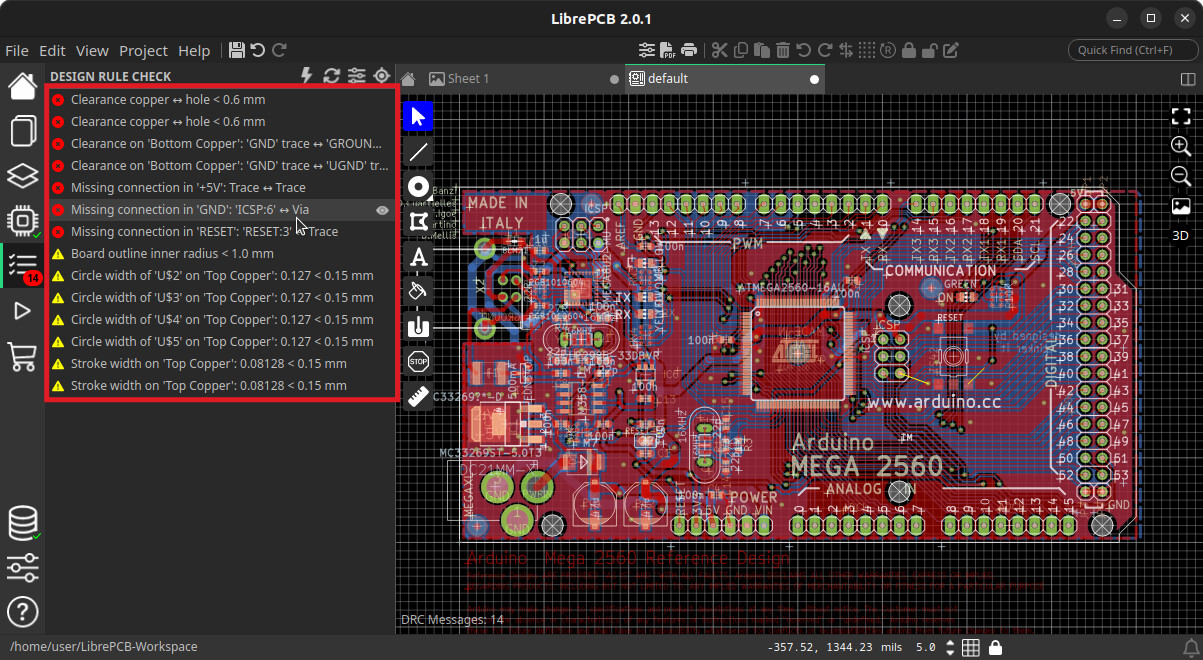
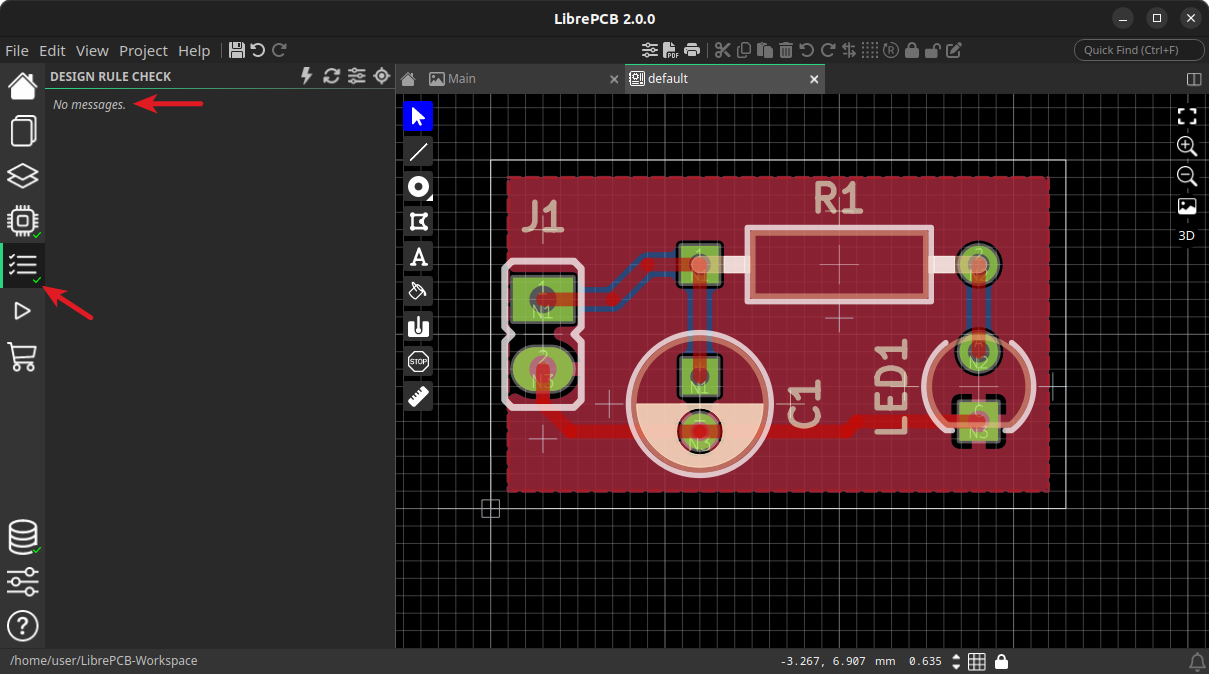
Resolve all errors found by the DRC. We can proceed with manufacturing once the tests pass without errors.
LibrePCB Fab (Direct Ordering)

The simplest way to order your design is LibrePCB Fab, simply click the shopping cart icon in the sidebar.

Advantage of LibrePCB Version 2.0.0: The software now automatically checks the ERC and DRC and warns you about outdated messages before you place the order. In the dialog, click Upload Project.

A page will open in your browser displaying a rendering of your PCB. Select AISLER in the manufacturer selection and proceed.
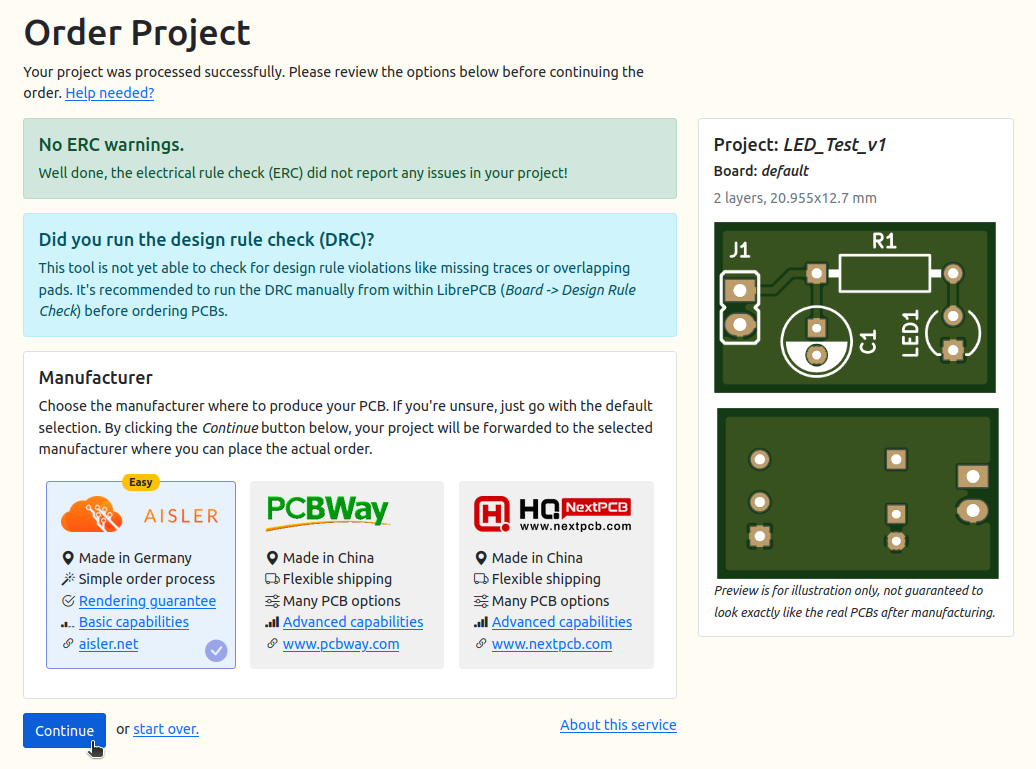
LibrePCB will then send the manufacturing files directly to our site, where you can see a final preview.

You can inspect your design using our board viewer after we processed the manufacturing files.

We give a rendering guarantee that the boards are manufactured as displayed in our viewer. You can read this article if you are unsure how to use our board viewer or if you want to know how the rendering guarantee works.

Upload of .lppz archive files

If you dont want to use LibrePCB Fab you can manually export a .lppz archive file and upload it to our site.

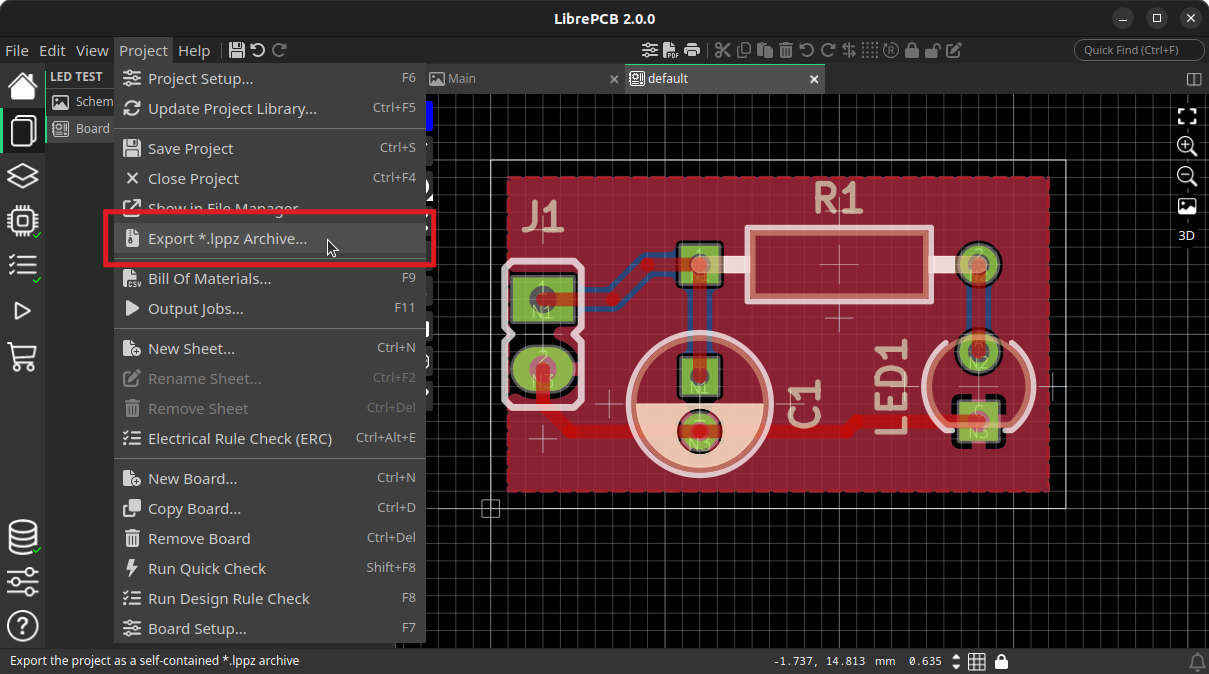
To do this, go to Project → Export .lppz Archive … and save the file.
Go to our upload page: Upload your project

Select the file you just exported, we will automatically process the manufacturing data.
If you are migrating legacy designs to LibrePCB, you don’t have to start from scratch. LibrePCB version 2.0 includes a built-in import tool for Autodesk EAGLE files.

Before we start, keep in mind: The importer only supports XML-based EAGLE files (v6 or later). If you have v5 .sch, .brd, or .lbr files, you must open and save them in a newer version of EAGLE first to convert the formatting.

Because this tool translates between two different software architectures, there are limitations. Review the following lists before you start, so you know exactly what requires manual clean-up.

Format & Architecture Limits
  • EAGLE v6+ Only: The importer only reads XML-based files. Workaround: If you have legacy v5 files, open and save them in a newer EAGLE version first.
  • Multi-Sheet Gates: If a component’s gates are spread across multiple schematic sheets, the import will fail. Workaround: Consolidate these onto a single sheet in EAGLE prior to import.
  • Buses & Modules: Importing buses is supported since LibrePCB 2.1.0, in older versions both are discarded during the schematic import.
  • Missing Components: Any devices placed on the board that lack a matching component in the schematic will be dropped.
Geometry & Visual Changes
  • User Layers: Custom polygons and texts on user layers are discarded.
  • Line Styles: Dashed or dotted lines are converted to solid, continuous lines.
  • Traces & Vias: Curved traces (or those with flat caps) are converted to straight lines with round caps. Rectangular or octagonal vias are forced into standard round vias. Workaround: Manually replace these specific vias with pads after the import.
  • Net Labels: Xref net labels are converted to standard net labels.
  • Copper Pours: LibrePCB’s plane-filling algorithm differs from EAGLE’s, so your poured copper geometry may yield slightly different results. Always double-check your planes!

Here is the step-by-step process for importing both your projects and your component libraries.

Part 1: Importing an EAGLE Project

Step 1: Start the Importer
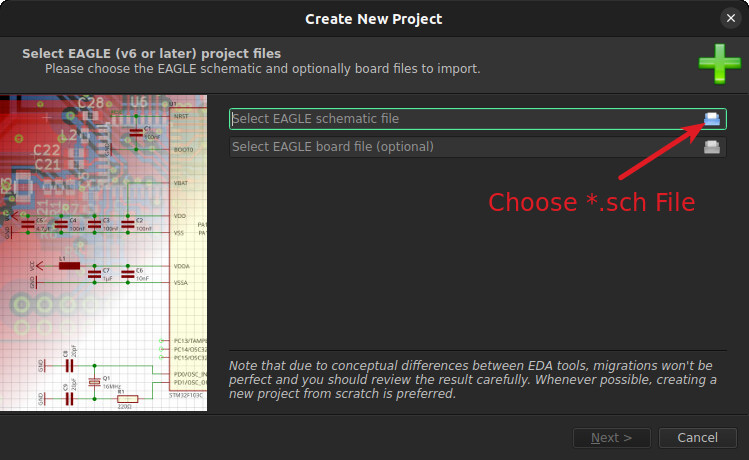
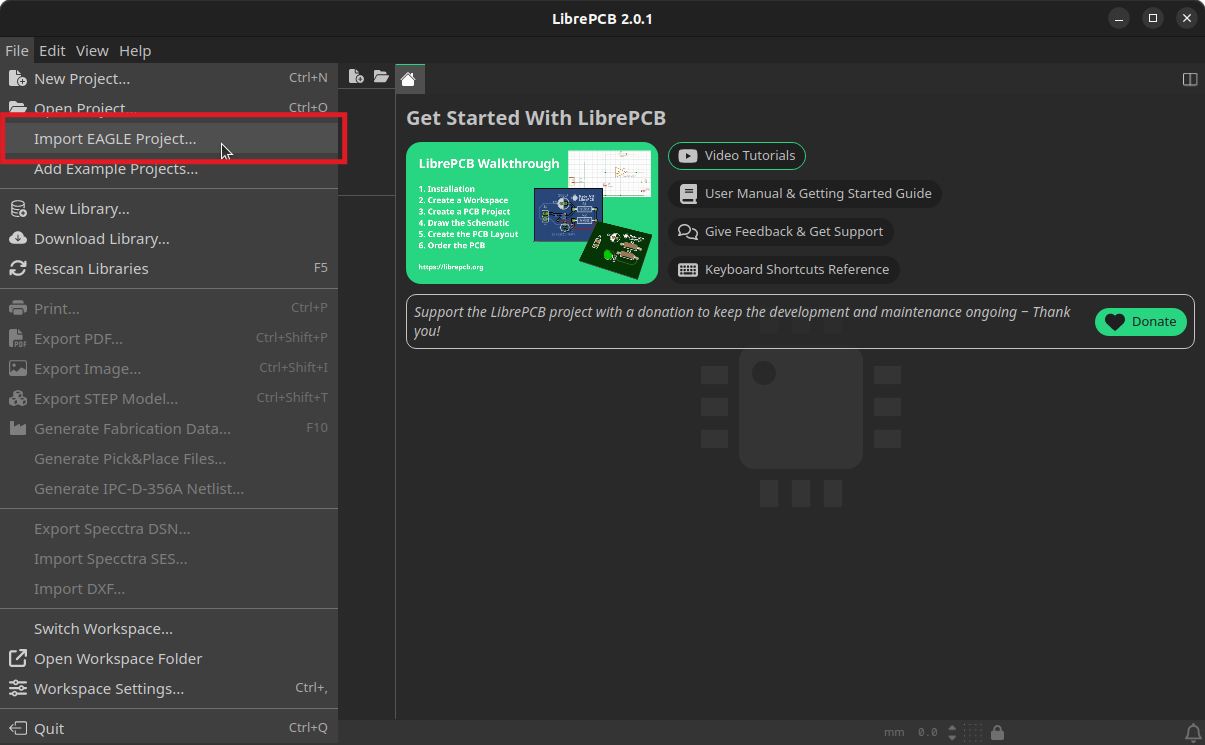
Open LibrePCB and navigate to File > Import EAGLE Project to start the process.

Step 2: Select Your Files
Point the tool to your existing EAGLE schematic and board files. Choose a *.sch file to import your project.

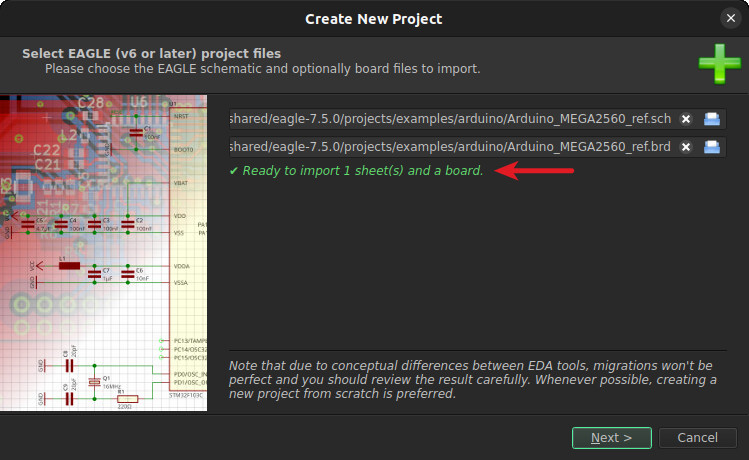
The software will parse the project and display a status check:

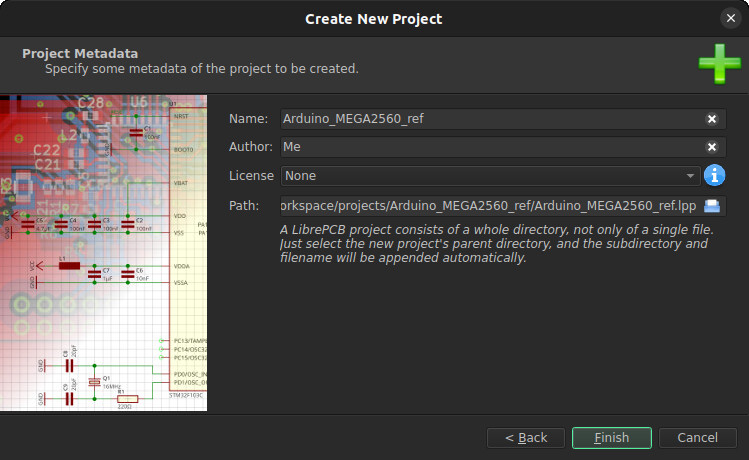
Step 3: Enter Project Metadata
Specify the necessary metadata to set up your new LibrePCB project.

Step 4: Check the Translation Log
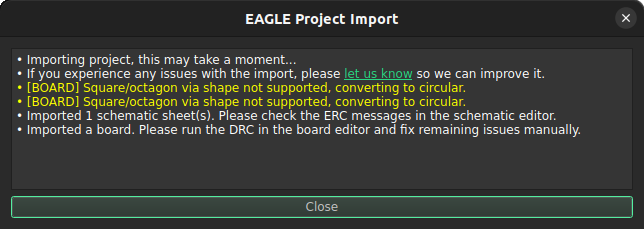
Once processed, LibrePCB will display a message log listing exactly what was modified or dropped. Pay close attention to warnings regarding user layers and custom polygons, as these require manual clean-up.

Step 5: Run the ERC and DRC
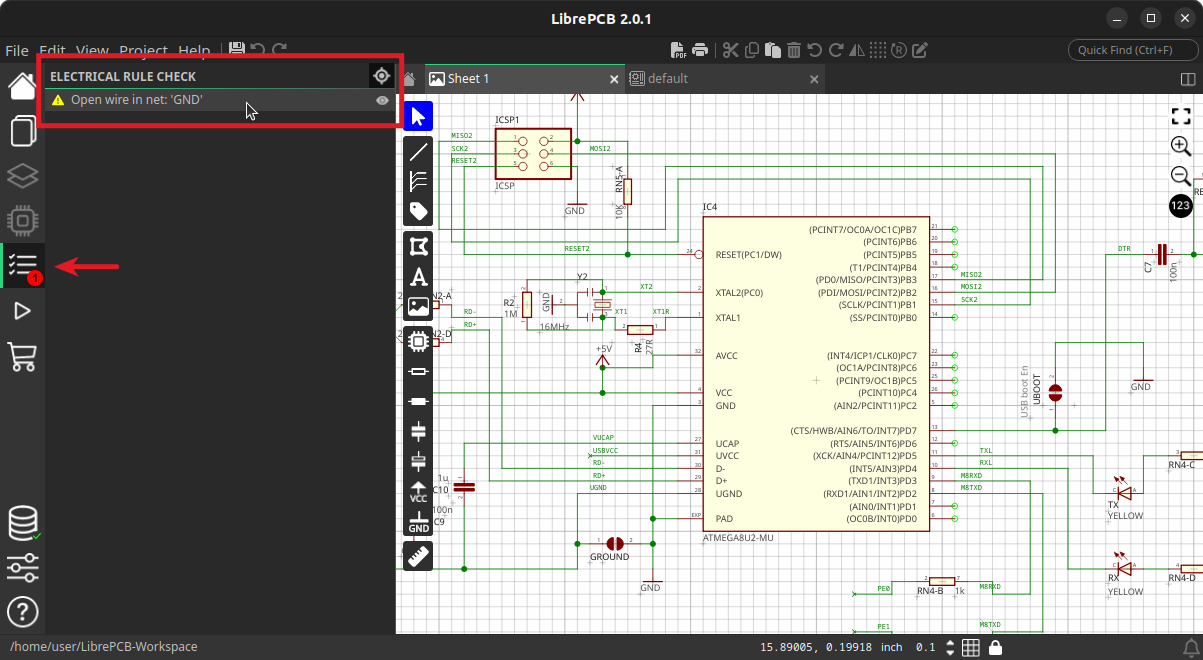
Because you are moving between two entirely different software architectures, you must re-validate your electrical connections and manufacturing constraints. Review the Electrical Rule Check (ERC) messages first.

Next, execute the Design Rule Check (DRC).


Remember that highly customised rules from EAGLE will be overwritten with LibrePCB’s default values.

Supported Design Rules
  • Max. tented via diameter (mlViaStopLimit)
  • Automatic via annular ring (rvViaOuter; simplified, not separated by top/inner/bottom)
  • Automatic THT pad annular ring (rvPadInner; simplified, not separated by top/inner/bottom)
  • Automatic stop mask clearance (mvStopFrame)
  • Automatic solder paste clearance (mvCreamFrame)
  • Min. copper/copper clearance (mdWireWire)
  • Min. copper/board clearance (mdCopperDimension)
  • Min. drill/drill clearance (mdDrill)
  • Min. copper width (msWidth)
  • Min. PTH annular ring (rlMinViaInner)
  • Min. PTH/NPTH drill diameter (msDrill)

Step 6: Final Review
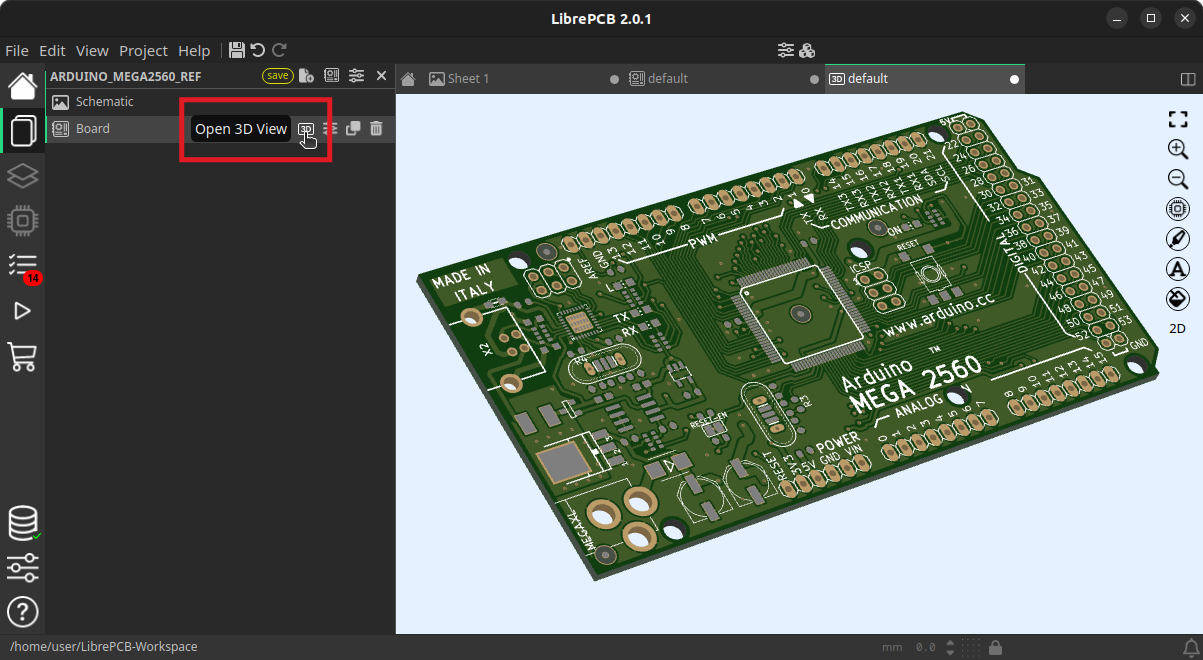
Switch to the 3D viewer to ensure your board geometry and component placement transferred correctly.


Part 2: Importing an EAGLE Library

If you want to build up your LibrePCB database with the custom footprints and symbols you’ve spent years tweaking in EAGLE, use the library import tool.

Advice: Import all library elements at once. LibrePCB does not currently detect already-imported elements. If you import step-by-step, you will end up with duplicates.

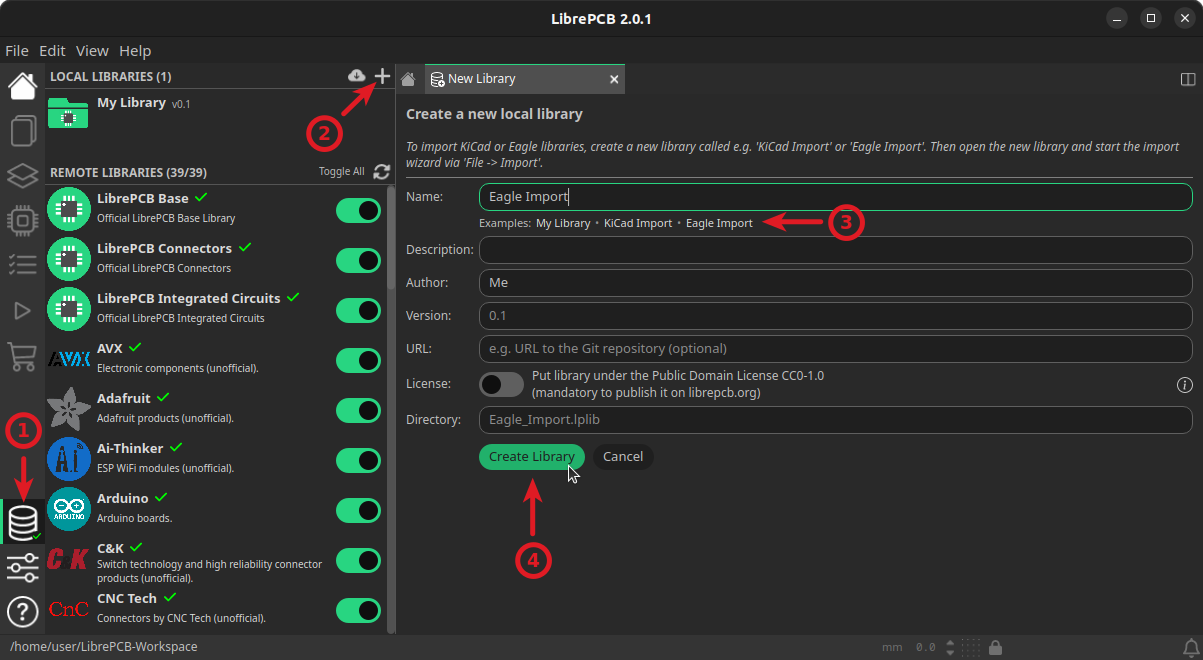
Step 1: Create a New Library
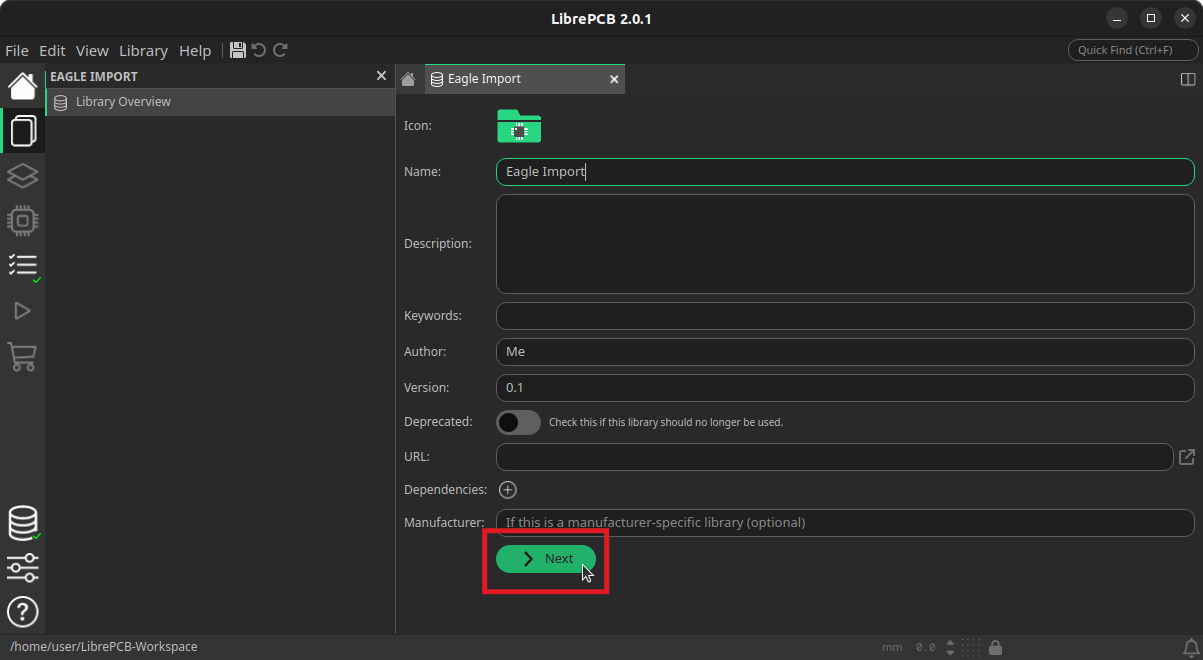
Create a new local library to house your legacy parts, give it a name and fill in the metadata.


Step 2: Start the Library Import
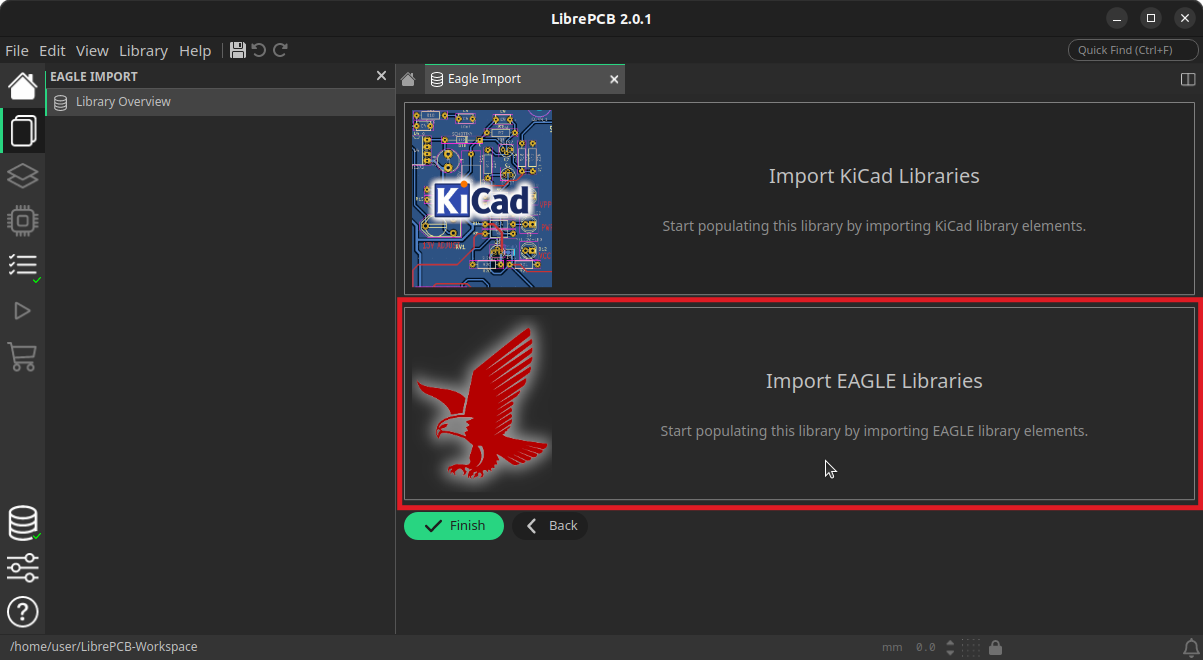
Open the import wizard for EAGLE libraries.


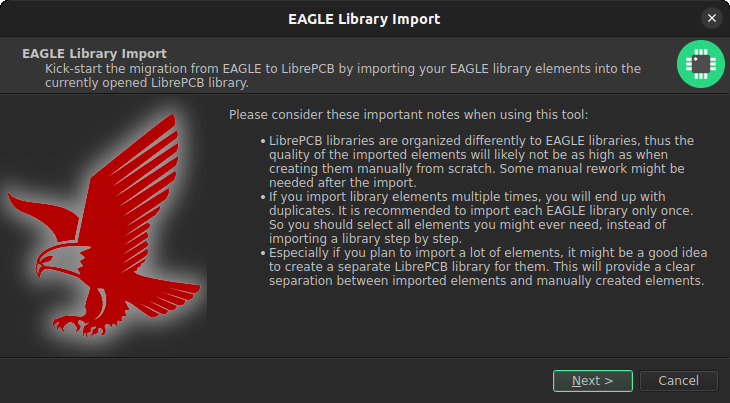
It will tell you, that you should import all elements, you might ever need and create a separate LibrePCB library for them:

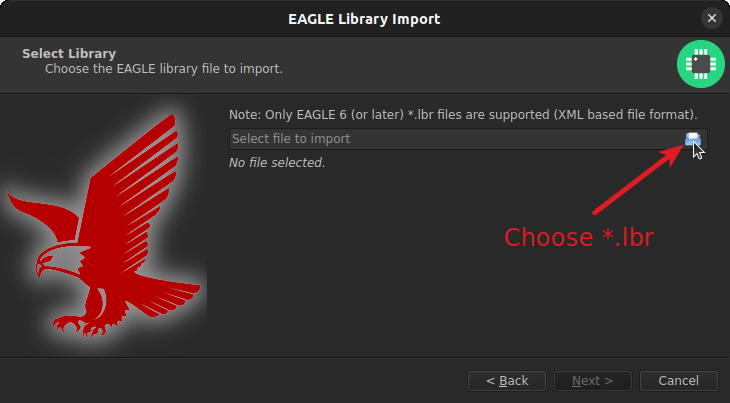
Step 3: Choose the File and Check Status
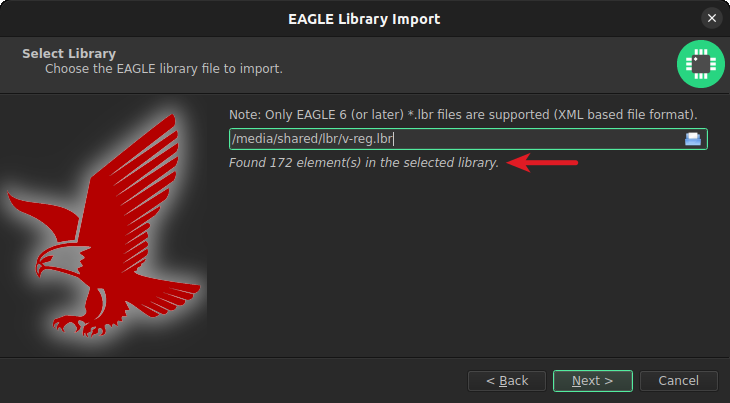
Select your EAGLE .lbr file. The wizard will parse the contents and display a status check to ensure the file is readable and all elements have been found.


Step 4: Select Elements
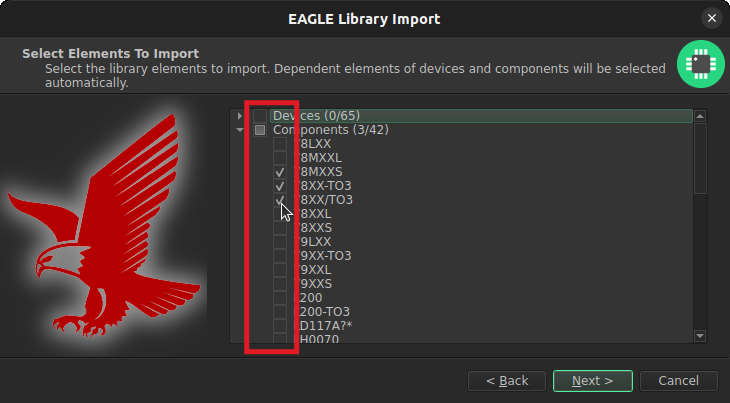
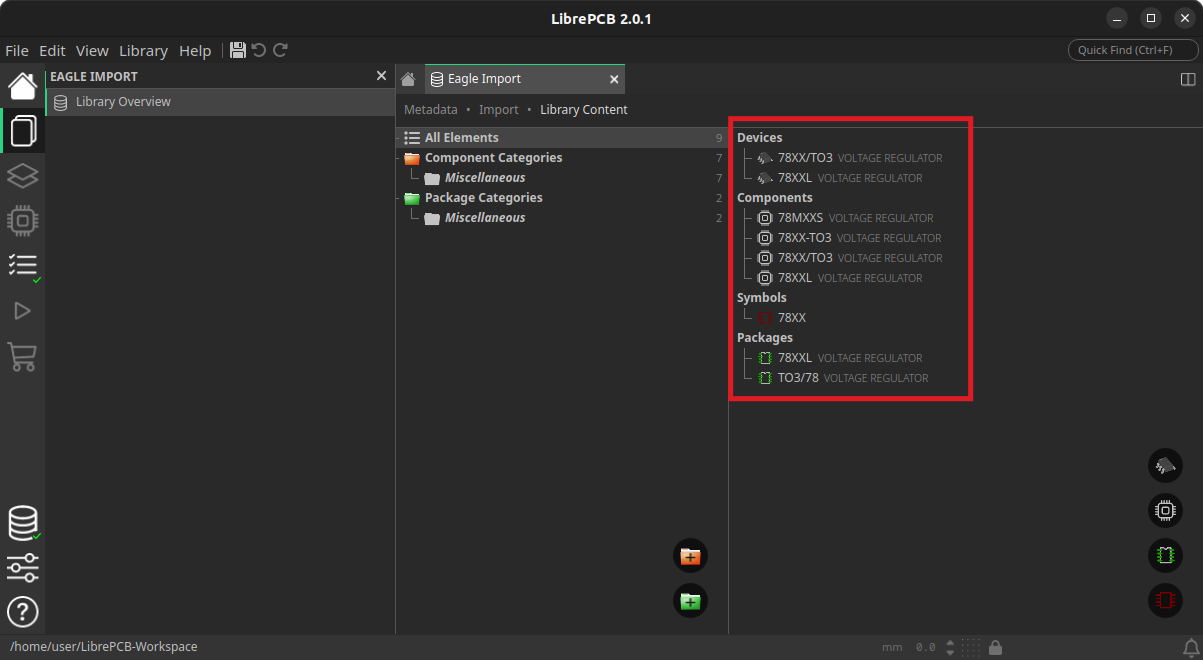
The tool will list the parsed contents. Select the symbols, footprints, and components you wish to bring over (again, a bulk import is highly recommended here to avoid duplication).

Step 5: Finalise Options and Import
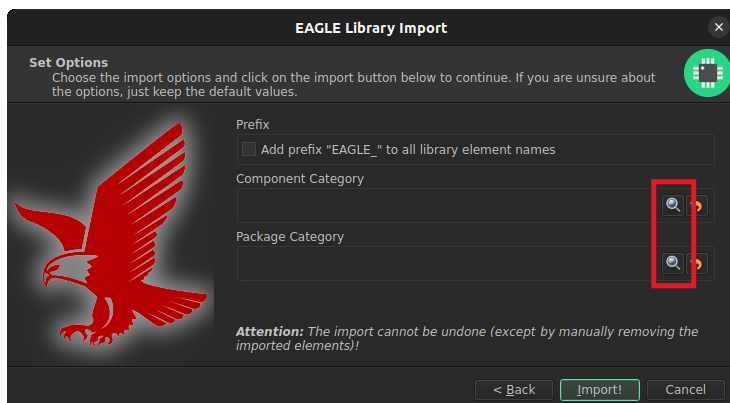
Review your import options, like adding an EAGLE_ prefix, or adding categories and execute the process by hitting Import!.


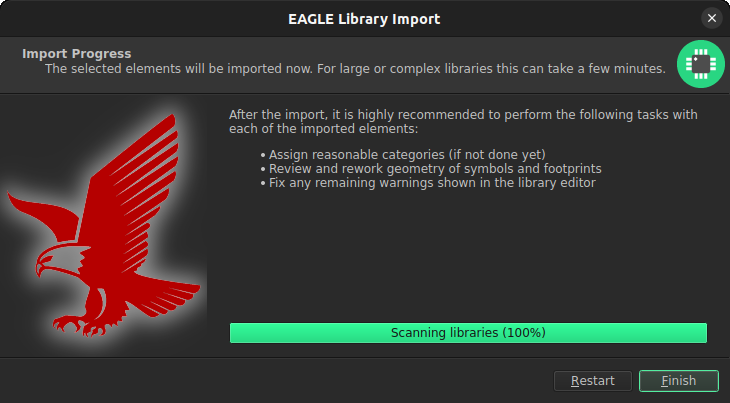
Once the wizard finishes, review the final result. Your legacy parts are now native to LibrePCB and ready to be dragged into your next schematic. :orange_heart: